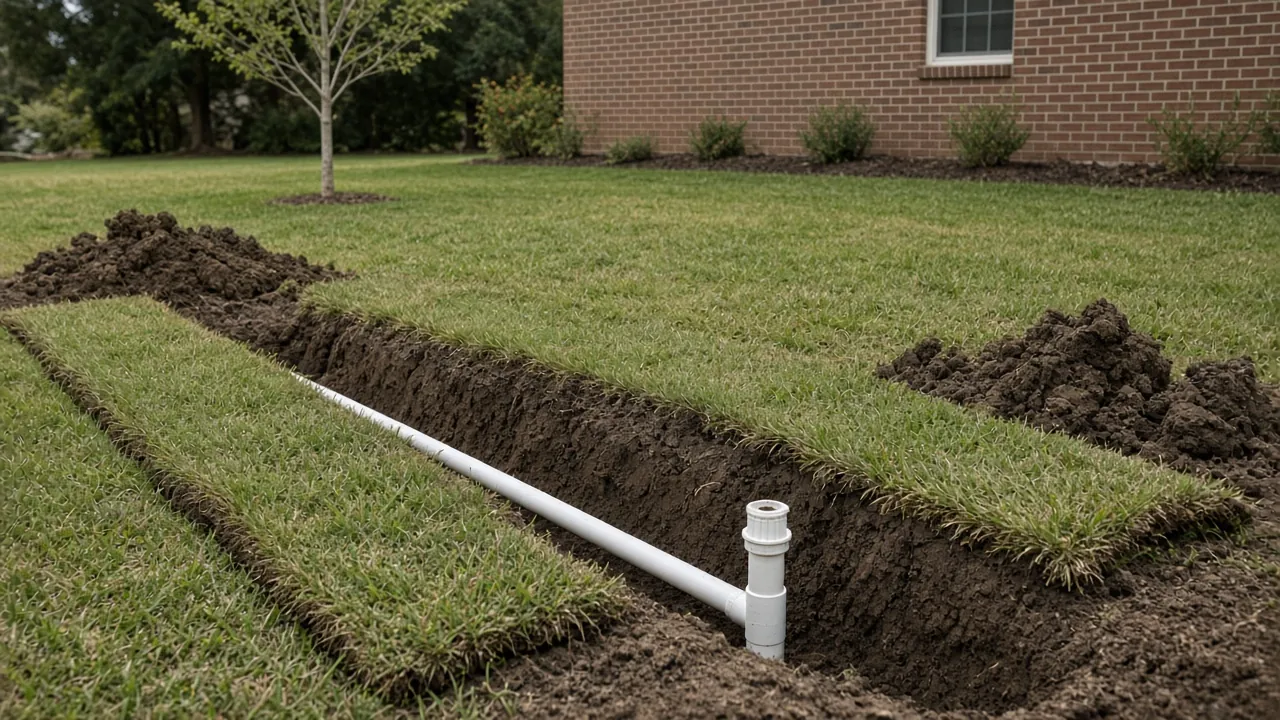
Remodels, pool installs, new fences, drainage work, tree planting, utility upgrades: on older lots in University Park and Highland Park, there is a lot of digging. Sprinkler pipe and wire sit just a few inches below the surface, and they are not marked by the utility locate service. So they get cut, crushed, or buried under new hardscape.
Some of that damage is obvious. A lot of it does not show up until the system runs a few weeks later. This article covers what to do before work starts, what to check after, and how to handle repairs.
Why sprinkler lines get hit
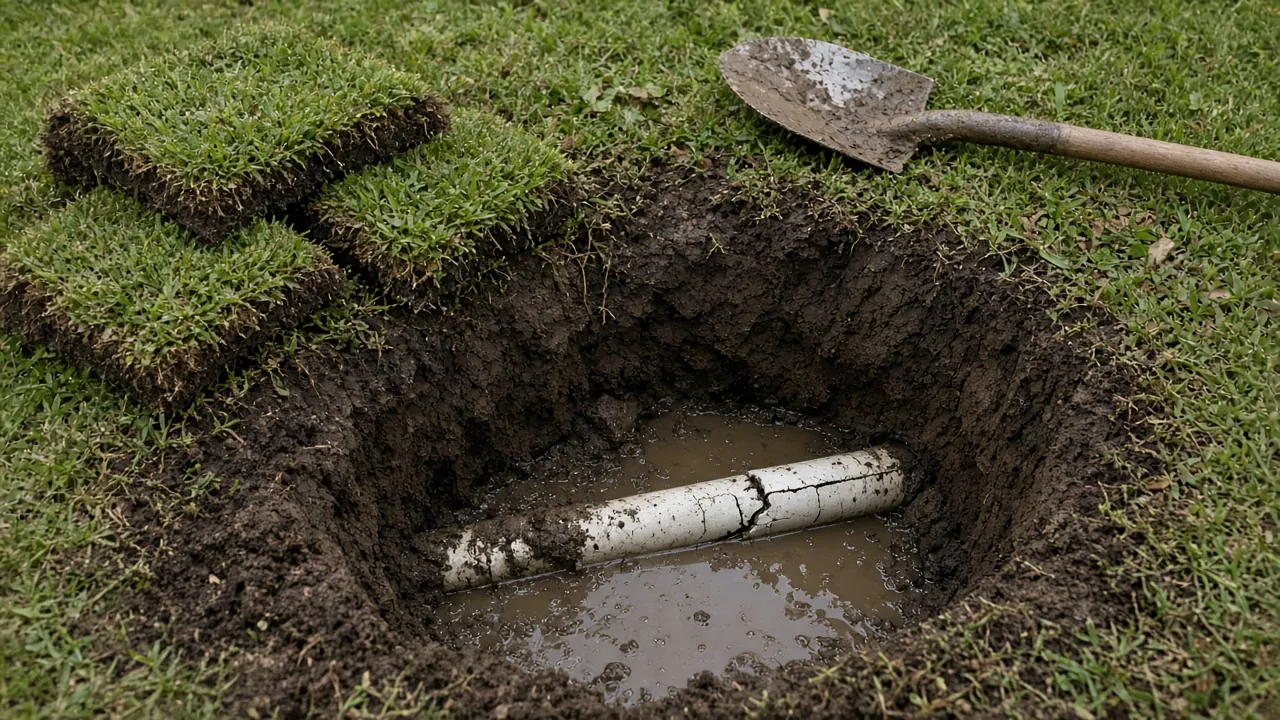
They are shallow. Texas design rules call for six inches of cover over irrigation pipe and wire on systems built under the current rules, per 30 TAC §344.62. Many older lines have less. A trencher, an auger or even a shovel reaches them easily.
They are private and unmarked. Texas law requires anyone digging, including homeowners and contractors, to contact 811 two business days before digging, according to Texas811. The utilities then mark their lines. But Texas811 notes that lines running from the meter onto private property may not be marked by public utilities, and private lines are the owner’s responsibility, according to its homeowner FAQ. Your sprinkler system is private, so it will not be painted on the ground.
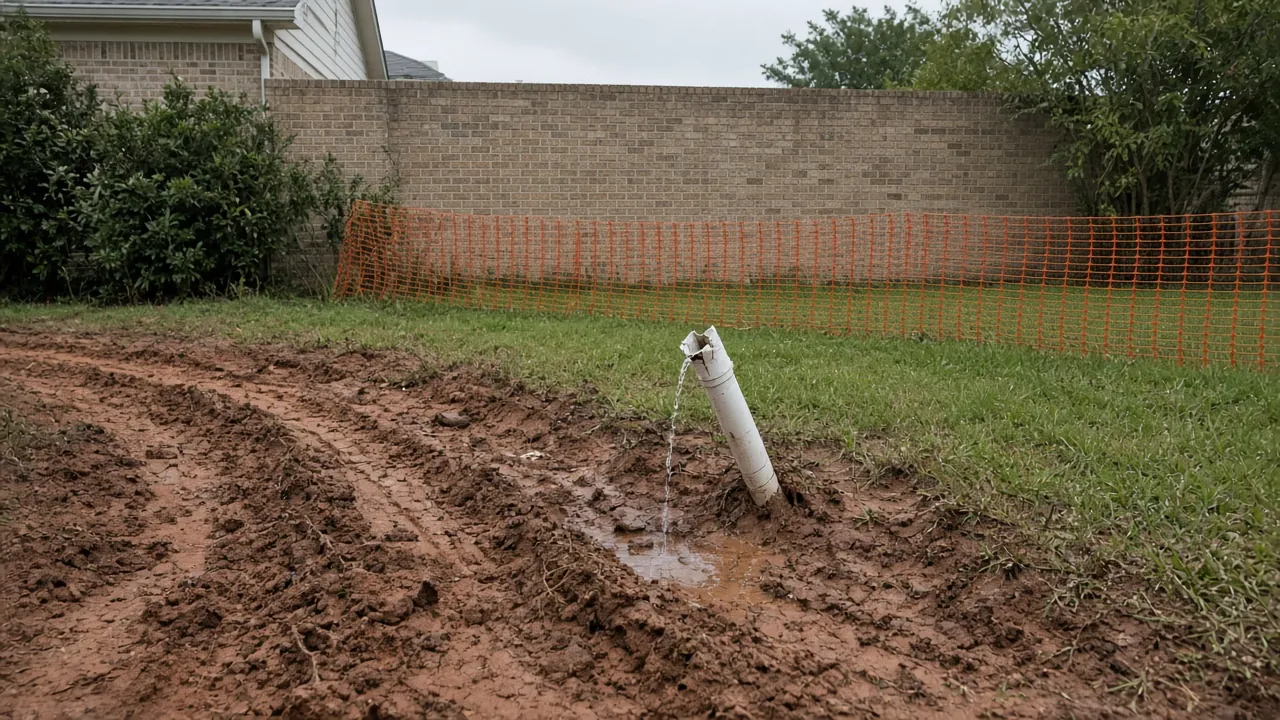
Heavy equipment crushes what it does not cut. Skid steers, concrete trucks and dumpsters roll over lawns and parkways, crushing heads, valve boxes and shallow pipe. Compacted soil can also crack pipe over the following weeks.
Before the work starts
- Make a map. Run each zone and flag every head with marking flags. Note where valve boxes are. If you have the original irrigation plan or a drawing, find it. University Park’s code requires the installer to give the owner an as-built irrigation plan for new installations, per Article 3.11, so newer systems may have one.
- Walk the work area with the contractor. Show them the heads, valve boxes, the controller and any wire runs you know about. Ask how equipment will get to the backyard.
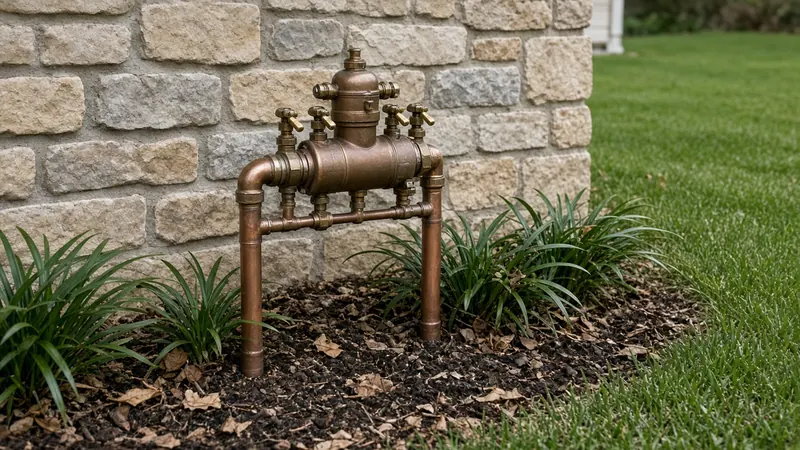
- Protect the backflow preventer. If it is near the work, cover or fence it. A crushed or knocked-over backflow assembly is an expensive repair and needs a licensed test afterward under 30 TAC §344.50.
- Decide what to cap. If a zone runs through an area that will be dug up, it can be capped ahead of time and rerouted after. That is much cleaner than repairing a cut line in a trench.
- Turn the system off, or set the affected zones off, during the work. Water running into an open trench makes a mess and hides damage.
- Put it in the contract. Ask who is responsible for irrigation damage, and agree on how it will be repaired.
After the crews leave
Do not wait for summer to find out. Before anyone fills the last trench or lays sod, if possible:
- Run every zone and walk it. Look for heads that do not pop up, geysers, bubbling soil, and zones with weak spray.
- Check zones that did not seem affected. A cut wire can stop a zone on the other side of the yard, because wires run from the controller to every valve.
- Read the water meter with everything off, then again after an hour. If it moved, something is leaking. Our high water bill article explains how to read the meter.
- Look at the parkway and driveway edges, where trucks drove.
- Check the controller. Electricians sometimes unplug or move it. Check the rain sensor wire too; roofers and gutter crews cut those often.
- Look for buried valve boxes. New sod, mulch, gravel or pavers often go right over them.
Common damage and what it means
| What you see | Likely cause |
|---|---|
| Geyser or bubbling soil in one spot | Cut or cracked lateral line |
| Water running constantly, even with the system off | Damaged mainline or backflow device |
| One zone dead, others fine | Cut wire to that valve, or a crushed valve |
| Several zones dead | Cut common wire, or controller disconnected |
| Heads not popping up near a work area | Crushed heads, or dirt in the line |
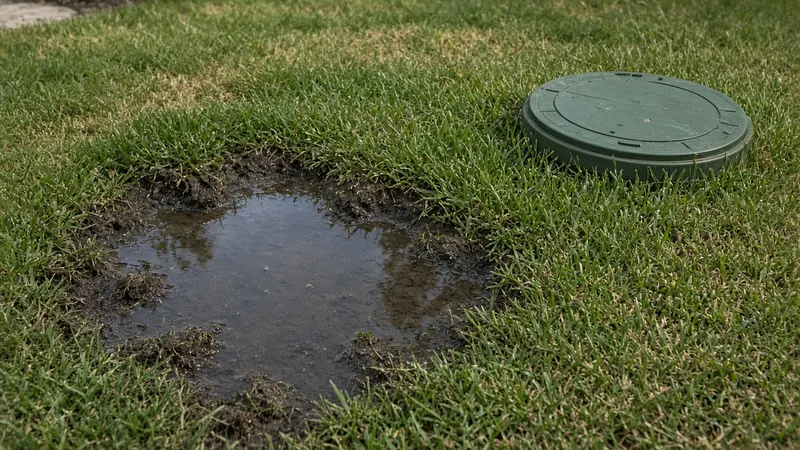
| Soggy area weeks later | Slow leak at a damaged fitting |
A slow leak in clay can take a while to show and may surface away from the break. Our guide on finding a sprinkler leak covers how to track one down.
New hardscape over old lines
When a patio, pool deck, driveway or addition goes in, lines underneath may be left in place. That causes two problems. A line under concrete cannot be repaired without breaking concrete, and heads that used to water that area are now gone or spraying the new hardscape. Texas rules for new systems prohibit spraying water onto impervious surfaces, per 30 TAC §344.62.
The right fix is usually to reroute the zone around the new hardscape and adjust or remove heads so nothing sprays the new surface. If the lot layout has changed a lot, it may be time to redo the affected zones entirely. See repair or replace an old system.
Landscape crews
New beds, tree planting and aeration damage sprinkler parts too. Tree planting augers and bed edging are the usual culprits. If you are adding beds, consider converting the bed zones to drip at the same time. See drip for flower beds.
Who pays
That depends on your contract and the contractor. What helps either way: photos and notes from before the work, a list of everything that was working, and a prompt check after. The sooner damage is found, the easier it is to connect to the work that caused it.
Repairs that bring code requirements
Some repairs after construction trigger rules. Replacing a backflow assembly requires a licensed test. Replacing a controller requires a rain or moisture sensor if there is not one. In University Park, digging at the meter or the backflow device requires adding an isolation valve if one is not present, and altering a system may need a permit. See what affects sprinkler repair cost for how these add up.
If your system was damaged by construction, contact us. We can walk it before the crews leave, or after. Our leak repair and sprinkler repair services cover the work.
Sources
- 30 Texas Administrative Code §344.62, Minimum Design and Installation Requirements
- 30 Texas Administrative Code §344.50, Backflow Prevention Methods
- Texas811, Homeowner guide and Homeowner FAQs
- City of University Park, Code of Ordinances, Article 3.11, Irrigation Systems
Have a question this did not answer? Call 469-902-9800 and ask. More articles on the blog.