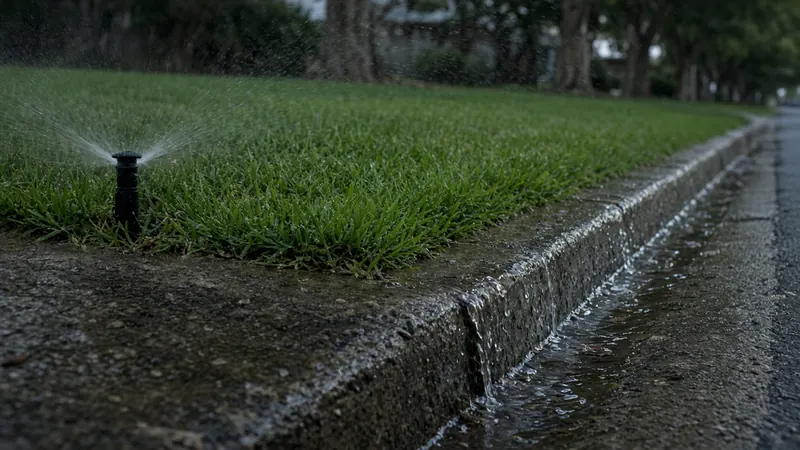
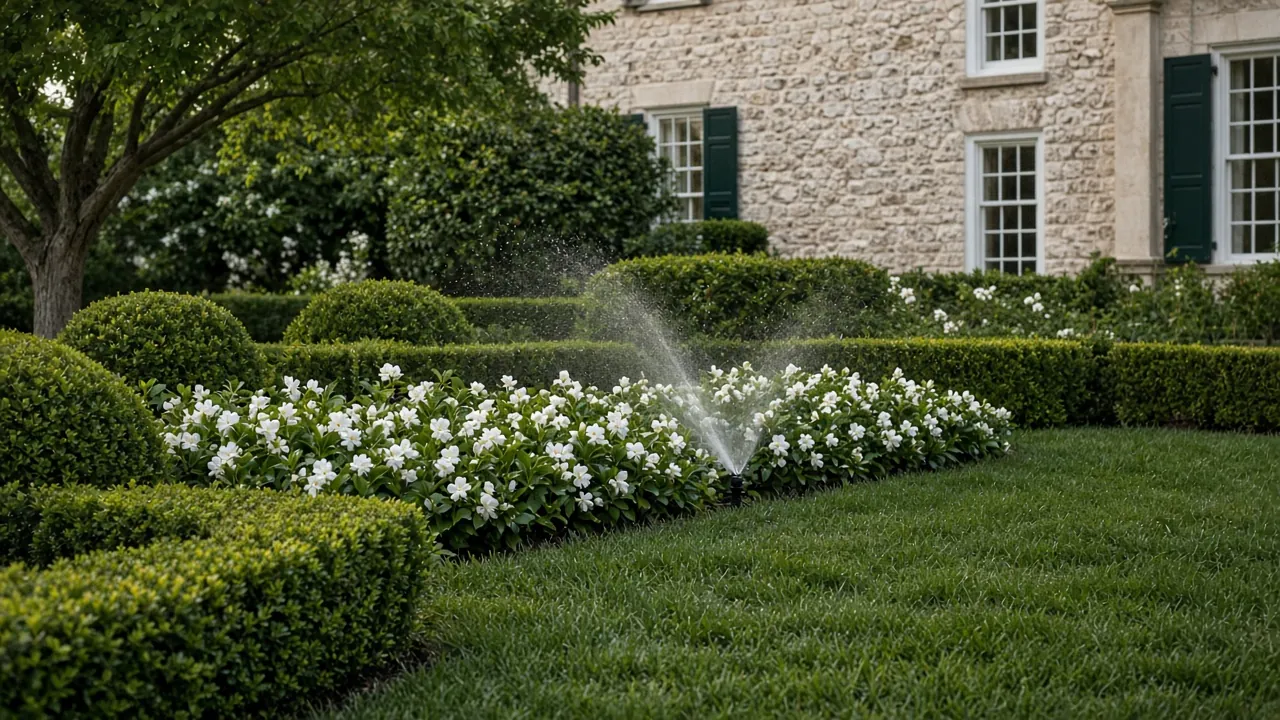
Walk past a bed zone on most older systems while it runs. You will see spray heads aimed over shrubs, water hitting the brick, a mist drifting onto the sidewalk, and wet leaves on plants that would rather stay dry. The bed is getting water, but much of it is going somewhere else.
Drip irrigation puts water directly at the base of each plant at a slow rate. For flower beds, shrub borders and foundation beds on Park Cities clay, it is often the better tool. This article explains when it makes sense, what a drip zone needs, how the local watering rules treat it, and the mistakes we see most.
Why drip suits beds on clay soil
Our soil is heavy Blackland Prairie clay. It takes water in slowly. Spray heads put water down fast, faster than clay can absorb it, so water runs off or puddles on top of the mulch. We explain this in detail in cycle and soak for clay soil.
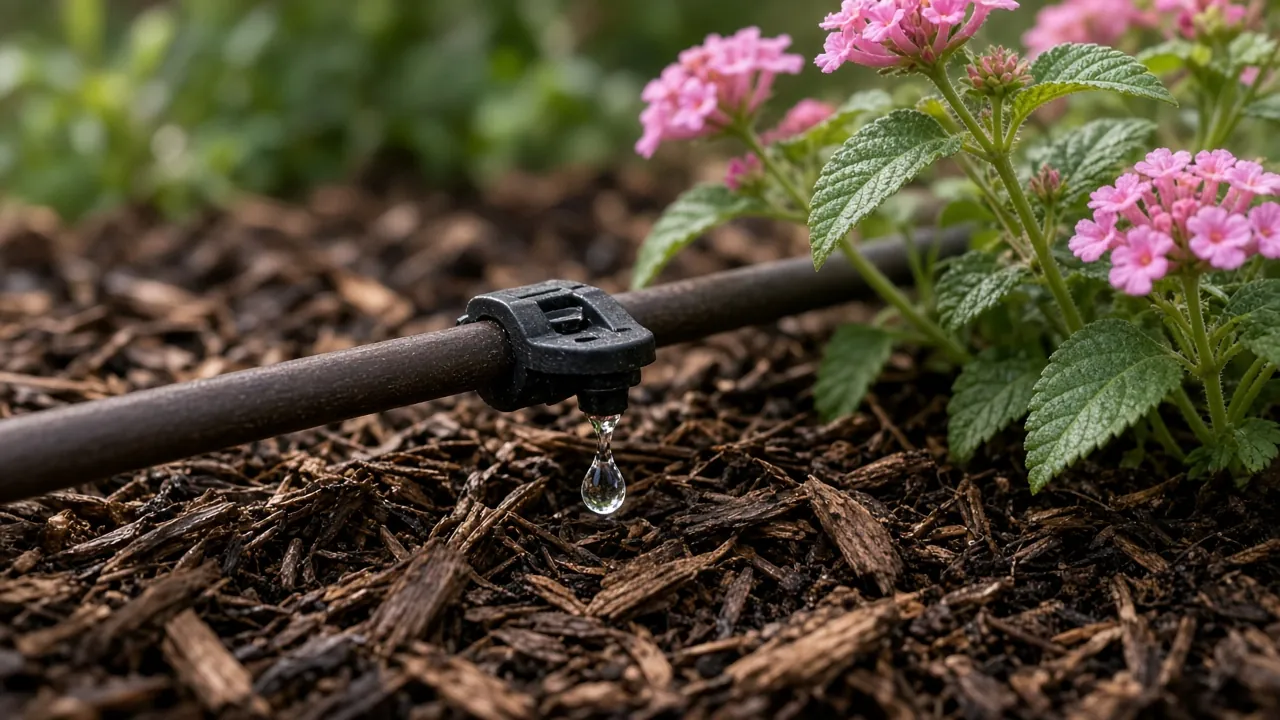
Drip emitters put water down slowly, often measured in gallons per hour instead of gallons per minute. That slower rate gives clay time to soak it in. Water spreads sideways underground from each emitter, so a bed gets wet where the roots are, not on the surface.
Other reasons drip works in beds:
- No overspray. Texas design rules for new systems prohibit spraying water onto impervious surfaces like walls, walks and streets, per 30 TAC §344.62. Beds next to the house and the sidewalk are where spray heads break that rule most.
- Dry leaves. Many bedding plants and shrubs get more leaf disease when leaves stay wet.
- Separate zones. The same state rule requires zones separated by plant type and other factors. Beds and lawn need very different amounts of water, and a drip zone makes it easy to water them separately.
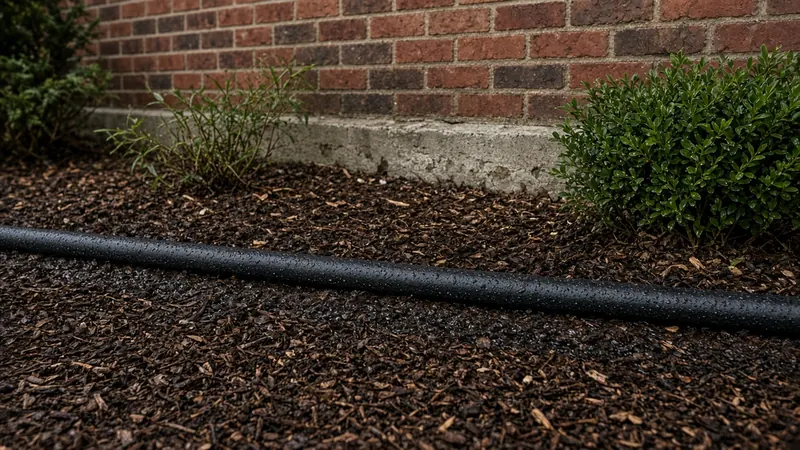
- Nothing to mow over. Drip tubing sits under the mulch.
How the watering rules treat drip
This is one of drip’s biggest practical advantages. The City of Dallas says drip irrigation, soaker hoses and hand watering are allowed on any day and at any time, according to its watering FAQ. University Park’s watering restrictions page also lets residents water at any time with a drip irrigation device, soaker hose, hand-held hose or watering can.
So in Preston Hollow, University Park and the other Dallas neighborhoods we serve, a drip zone is not tied to the twice-a-week spray schedule the same way. Highland Park’s rules are different, so check the Town of Highland Park water conservation page before you assume. Our watering rules guide compares all three.
Being allowed to water any day does not mean you should. Beds on clay usually need water less often than people think. Check the soil a few inches down before adding run time.
What a drip zone needs
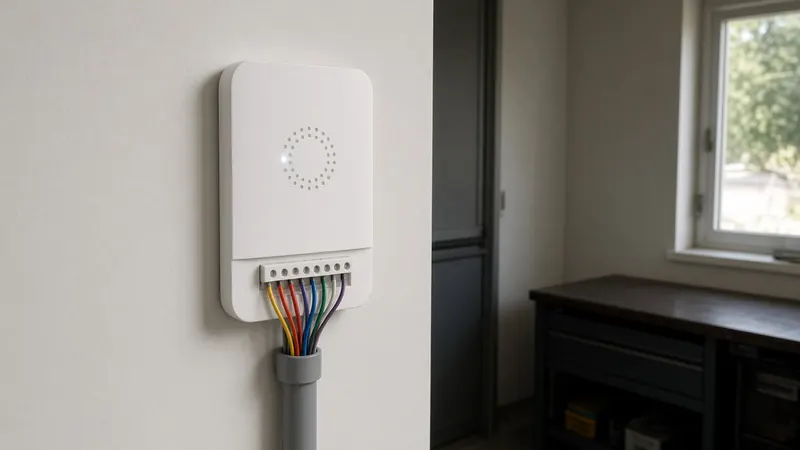
A drip zone is not just tubing hooked to a valve. It needs three pieces at the head of the zone, usually in the valve box:
- A filter. Drip emitters have tiny openings. Grit in the water clogs them. A filter at the start of the zone catches it.
- A pressure regulator. Drip runs at much lower pressure than spray heads. Without a regulator, fittings pop apart and emitters can blow off.
- The zone valve, same as any other zone.
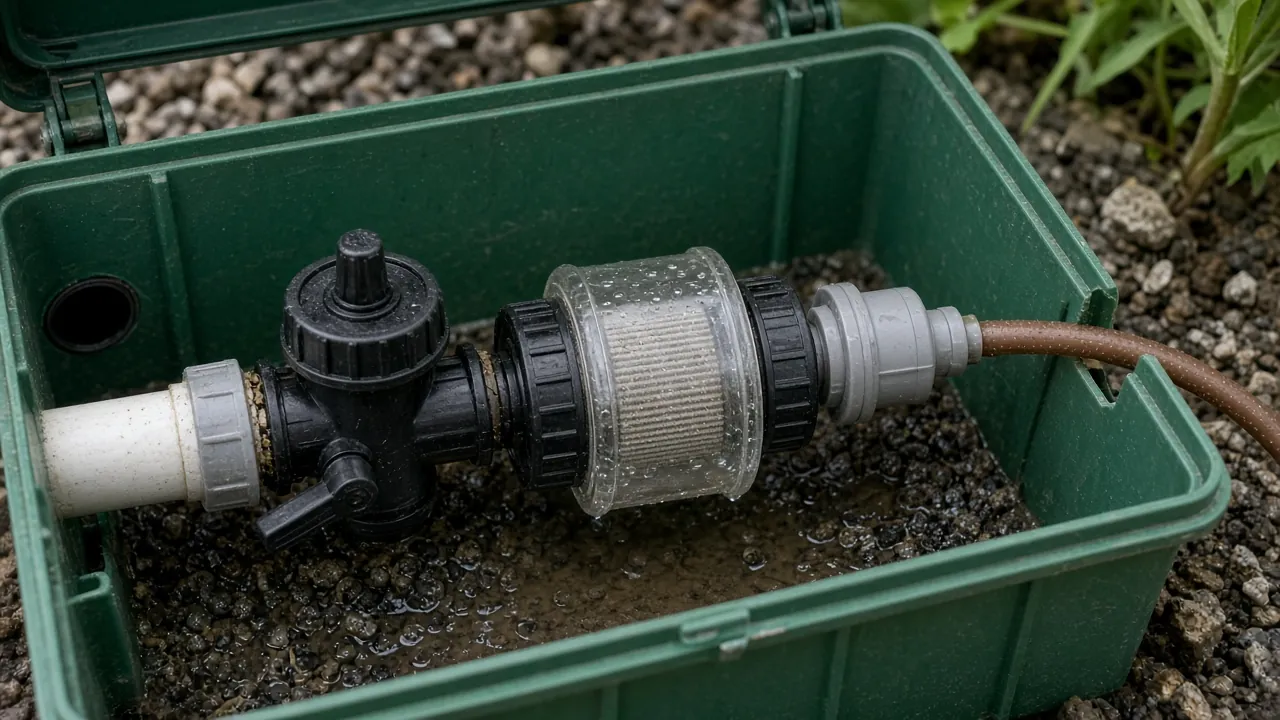
Then the tubing itself. There are two common approaches:
- Inline emitter tubing, where emitters are built into the tubing at a set spacing. Laid in rows across a bed, it waters the whole bed evenly. Good for dense plantings and groundcovers.
- Blank tubing with individual emitters punched in at each plant. Good for shrubs spaced far apart.
Flush caps at the ends of runs let you flush out sediment. Stakes keep tubing in place, and mulch covers it.
Converting a spray zone to drip
Most bed zones can be converted without digging up the whole bed. The usual approach:
- Cap the spray heads at the riser, or remove them and cap the fittings below grade.
- Install a filter and pressure regulator at the valve, or use a conversion fitting at one head location if the layout allows.
- Run drip tubing through the bed from the supply point.
- Run the zone, check for leaks and wet spots, and adjust.
Two things to watch. First, a bed and lawn sometimes share a zone on older systems. Converting only part of a zone to drip leaves the zone with mixed precipitation rates, which the state design rule warns against. The cleaner fix is to split the zone. Second, if you are a Dallas Water Utilities customer, the city’s irrigation rebate FAQ lists converting spray zones to drip or bubblers among the eligible upgrades for qualifying homes. Our smart controller and rebate article explains who qualifies.
Foundation beds
On clay, the soil next to the foundation shrinks when it dries and swells when it gets wet. Many people use their bed zone to keep that soil more even. A Texas A&M AgriLife fact sheet on protecting foundations under dry conditions suggests a dedicated drip zone about 8 to 18 inches from the foundation. We cover this in watering the foundation on clay soil.
Common drip mistakes
- No filter, or a filter that is never cleaned. Emitters clog, plants die in patches, and someone adds more run time to compensate.
- No pressure regulator. Fittings blow apart, and you get a geyser under the mulch.
- Tubing pulled up by digging. New plantings are the most common cause of drip damage. Mark the tubing before you plant.
- Run times copied from the spray schedule. Drip needs longer run times than spray, but often fewer of them. A spray schedule on a drip zone will be wrong.
- Squirrels and dogs. They chew tubing. A chewed line shows up as a wet spot and a dry bed downstream.
- Mixed emitters on one zone. Like mixing spray nozzles, it waters unevenly.
Checking a drip zone
Once a month in the growing season, run the zone and walk the bed. Look for spurting fittings, dry plants, and puddles. Pull back mulch at a few plants and feel the soil. Clean the filter screen. If one plant is struggling while its neighbors are fine, check its emitter first.
If you want help converting a bed zone, or a drip zone is not working, our drip irrigation service covers design, conversion and repair.
Sources
- 30 Texas Administrative Code §344.62, Minimum Design and Installation Requirements
- City of Dallas, Save Dallas Water FAQ
- City of University Park, Watering Restrictions
- Town of Highland Park, Water Conservation
- Dallas Water Utilities, Irrigation Rebate Program FAQs (PDF)
- Texas A&M AgriLife Research and Extension Center at Dallas, Protecting Foundations Under Dry Conditions (PDF)
Have a question this did not answer? Call 469-902-9800 and ask. More articles on the blog.