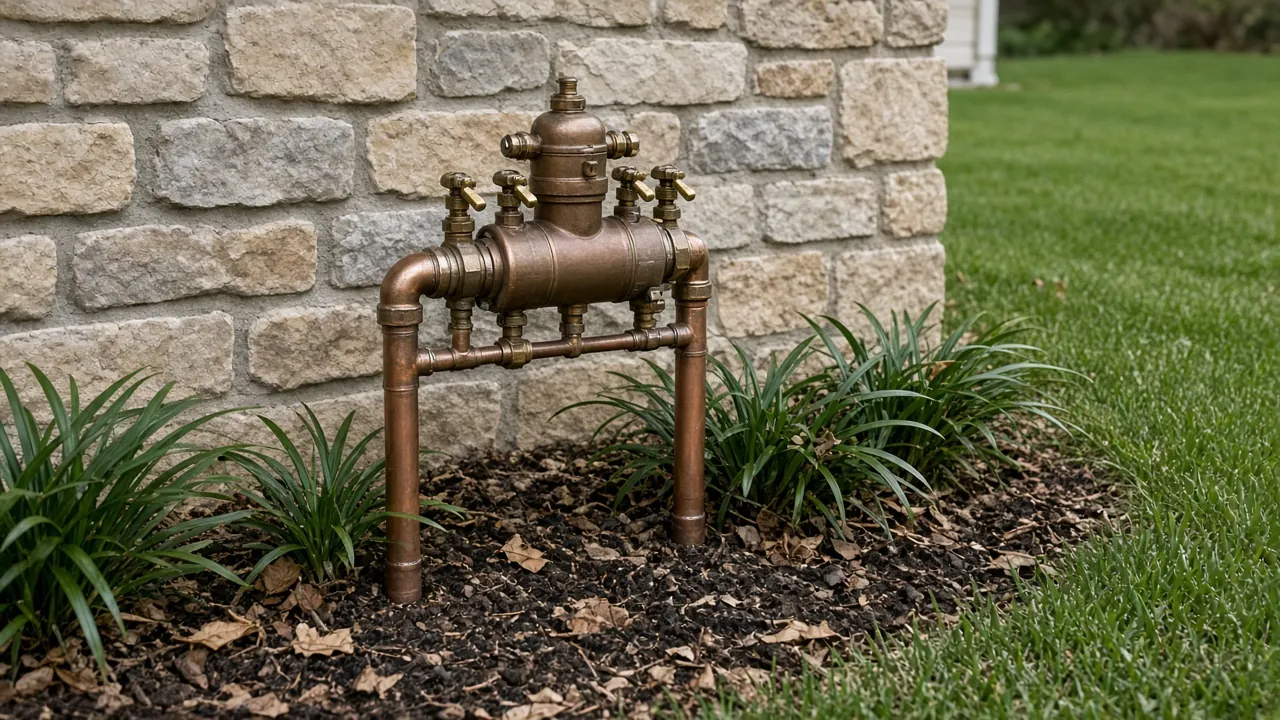
Most homeowners walk past their backflow preventer every day without knowing what it is. It is usually a brass assembly with two small valve handles, sitting a foot or so above the ground near the foundation, or a smaller assembly in a box in the lawn. It is the reason the water sitting in your sprinkler pipes, which has been in contact with soil, fertilizer and whatever else is in the lawn, cannot flow back into the pipes that feed your kitchen.
This article covers what the device does, the types you will see on Park Cities and North Dallas homes, when Texas rules require it to be tested, and what to do when it fails or freezes.
What backflow is
Water normally flows one way: from the city main, through your meter, into the house and the sprinkler system. Backflow is water moving the wrong way. It can happen two ways.
Back-siphonage. Pressure in the city main drops, from a main break or a fire hydrant being opened down the street. The drop can pull water backward out of your sprinkler lines, the same way a straw pulls liquid.
Back-pressure. Something on your side pushes water at a higher pressure than the supply, such as a pump connected to the system.
Either way, water that sat in buried pipes with open sprinkler heads in the dirt would be pulled back toward drinking water. The backflow preventer is a set of check valves that only let water move one direction.
The types you will see
Texas rules for irrigation systems, in 30 TAC §344.50, list the methods allowed. In practice you will see three on homes in our area.
Pressure vacuum breaker (PVB). The most common one on older Dallas-area systems. It sits above ground, and the rule says it must be at least 12 inches higher than any downstream piping and the highest sprinkler head. That is why it is often sticking up next to the foundation in a bed. It cannot be used where there is a back-pressure risk.
Reduced pressure principle assembly (RPZ). Used where the hazard is higher, for example if chemicals are injected into the system. It must be at least 12 inches above ground so it never sits underwater, and there has to be drainage for water it discharges through its relief valve. A dripping RPZ is often doing its job.
Double check valve assembly. Two check valves in one body, often installed below ground in a box. The state rule allows it only where there is no health hazard, and requires plugged test cocks and clearance around the assembly for testing and repair.
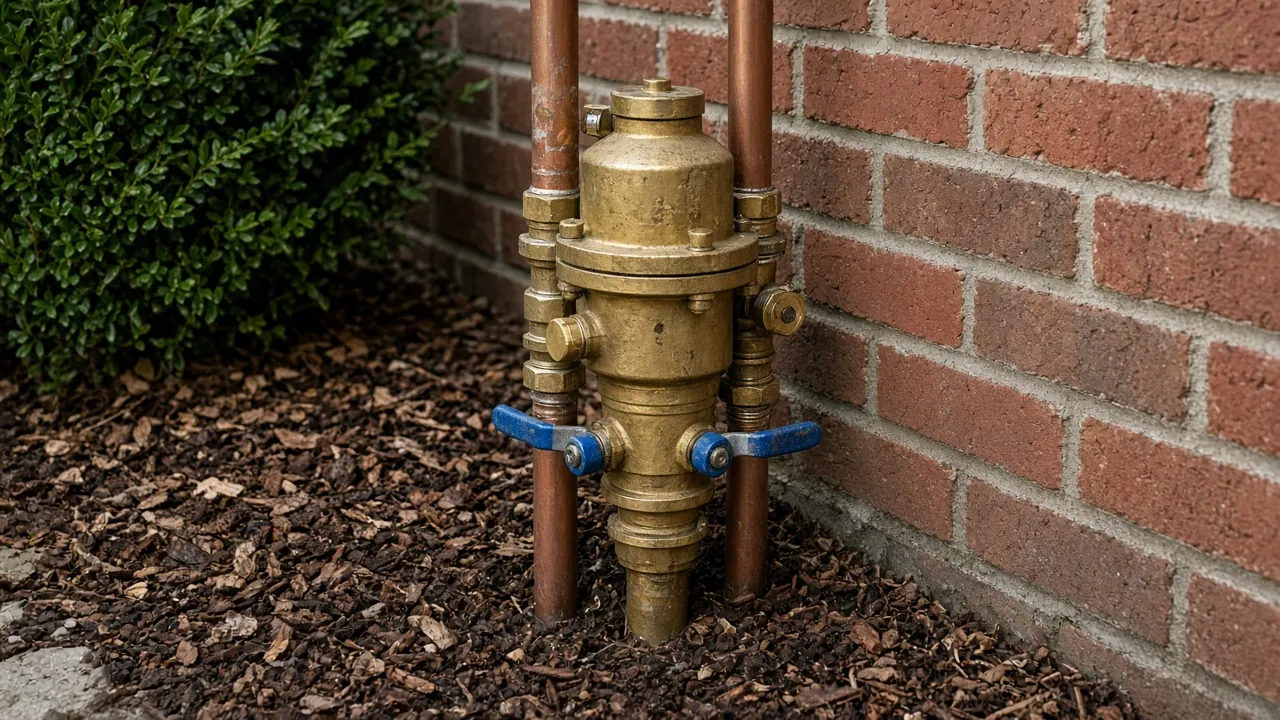
If you are not sure which you have, look for a model number on the body, or send a photo to whoever services your system.
When Texas requires a test
The state rule is short. Under 30 TAC §344.50(e), every backflow prevention assembly on an irrigation system must be tested by a licensed backflow prevention assembly tester:
- when it is installed,
- when it is repaired,
- when it is replaced,
- and when it is relocated.
Assemblies on irrigation systems designated as health hazards must also be tested every year.
That means a routine residential sprinkler system with no chemical injection usually does not have a state annual test requirement, but any work on the assembly itself triggers a test. Your water provider can set its own rules on top of the state minimum, so it is worth asking.
Testers are licensed by the Texas Commission on Environmental Quality. A Backflow Prevention Assembly Tester license requires training and an exam, and you can look up any tester’s license from the TCEQ’s licensing page, which links to its license search.
University Park adds its own requirements
University Park’s irrigation ordinance, Article 3.11 of the city code, follows the state rules and adds a few that matter here:
- The irrigator must have the device tested by a licensed tester before the system goes into service, and the results must go to the water provider and the owner within ten business days.
- The backflow assembly has to be accessible from a public right-of-way without passing through a gate or door. Fences can be offset to make that work.
- If an older system without a backflow assembly needs major work on the mainline or valves, an approved backflow assembly has to be installed before that work is done.
- When work involves digging at the meter or the backflow device, an isolation valve has to be added if one is not already there.
That last pair is why a “simple valve replacement” on a very old system sometimes becomes a bigger job. If you are weighing whether a repair is worth it, our article on repairing or replacing an old system goes through it.
Signs a backflow preventer has a problem
- Water spraying or dripping from the top of a PVB when the system runs. The bonnet or poppet seal is worn, or the body is cracked.
- Water running from an RPZ relief port constantly, not just briefly at start-up. Something is fouling a check valve.
- No water to any zone, even though the controller is running. One of the handles may be closed, or the assembly may be damaged.
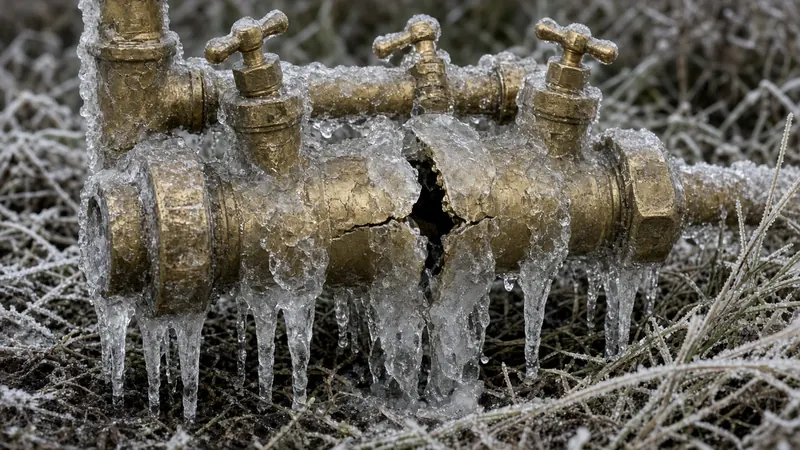
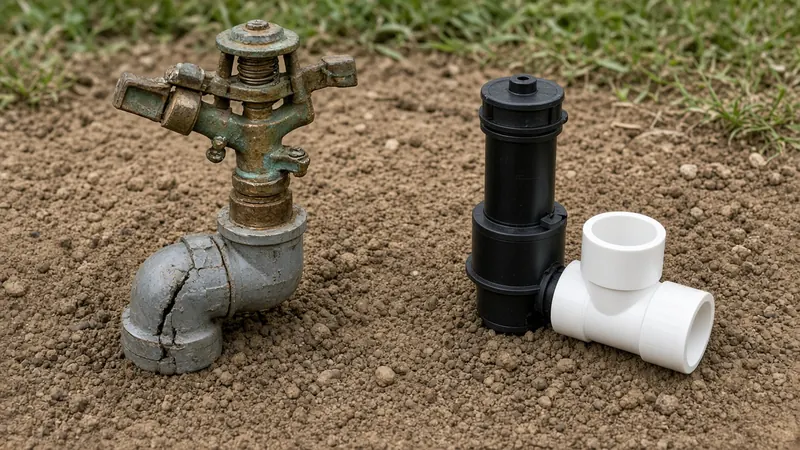
- A crack in the brass body, often a thin split line. That is almost always freeze damage.
- A wet spot around a buried double check in its box.
A leaking backflow device wastes water every cycle and can mean your drinking water is not protected. It is worth fixing promptly. See our backflow testing and repair page for what that visit involves.
Freezes are the main threat
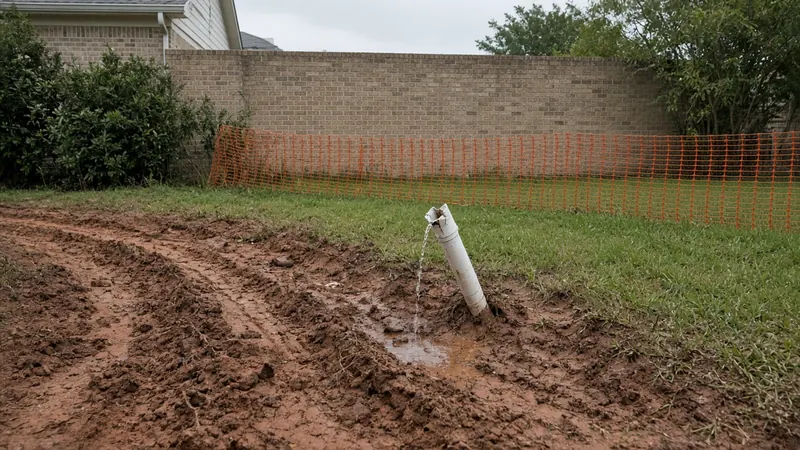
Because a PVB or RPZ has to sit above ground, it is the most exposed part of the system in a hard freeze. Brass bodies split, and the internal parts crack. The first sign is often a spray of water the next time the system runs, or a puddle next to the foundation.
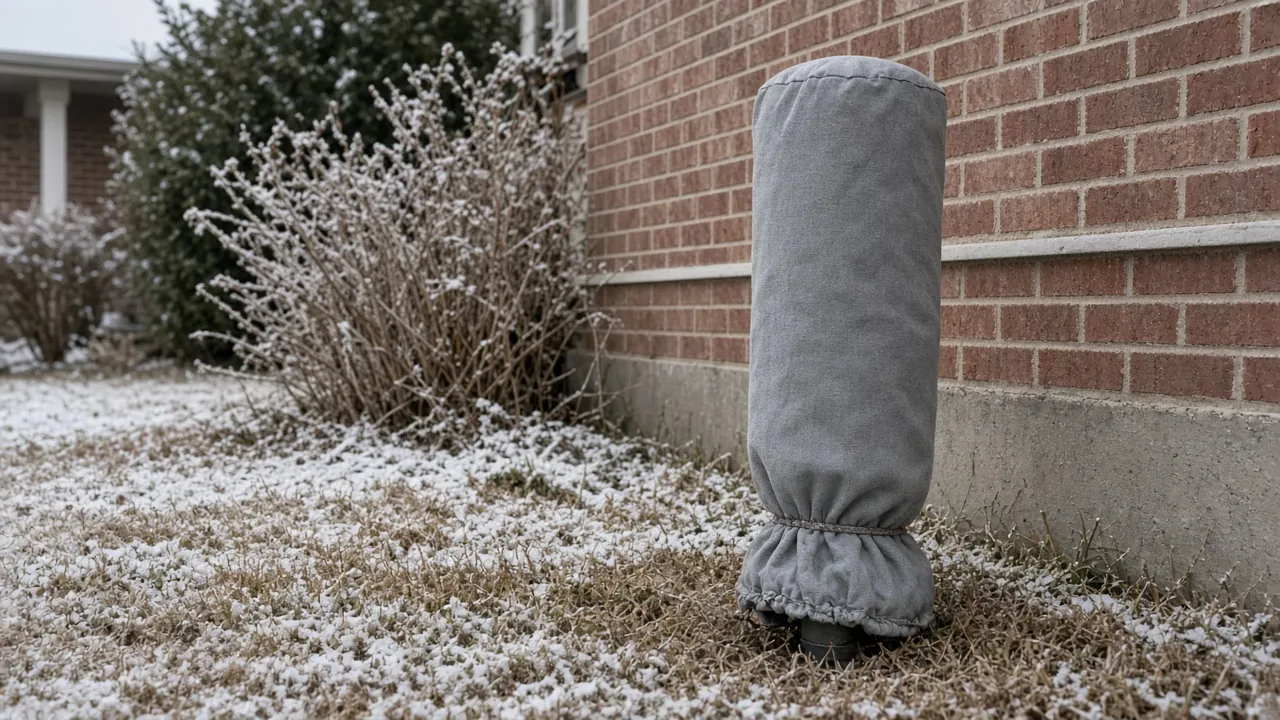
Before a hard freeze, shut off the water to the irrigation system at its isolation valve, open the test cocks or drain the above-ground piping as the manufacturer allows, and cover the assembly with an insulated pouch or wrap. Leave the valve handles in a half-open position if the manufacturer recommends it. Our freeze prep guide has the full step-by-step for Dallas winters, and winterization and freeze protection covers what we do on a visit.
Things that need a licensed person
Homeowners can do a lot on their own systems. Texas lets a homeowner work on the irrigation system at the home they own and live in, as University Park’s code notes, but the work still has to meet the state standards in Chapter 344, including backflow prevention. And the test itself has to be done by a licensed tester. In practice, if the assembly needs repair or replacement, plan on a licensed irrigator or plumber and a licensed tester, which are sometimes the same person.
What to ask when you hire someone
- What type of backflow assembly do I have, and is it the right type for this system?
- Is it high enough above the highest head, and is it accessible for testing?
- Is there an isolation valve between the meter and the assembly?
- Who will test it after the work, and will I and the water provider get a copy of the report?
- What is your license number, and the tester’s?
Those questions sort out most problems before they start. If you live in Dallas, Preston Hollow or the Park Cities, and want someone to look at your assembly, contact us.
Sources
- 30 Texas Administrative Code §344.50, Backflow Prevention Methods
- City of University Park, Code of Ordinances, Article 3.11, Irrigation Systems
- Texas Commission on Environmental Quality, Backflow Prevention Assembly Tester license
- Texas Commission on Environmental Quality, Occupational Licensing
Have a question this did not answer? Call 469-902-9800 and ask. More articles on the blog.