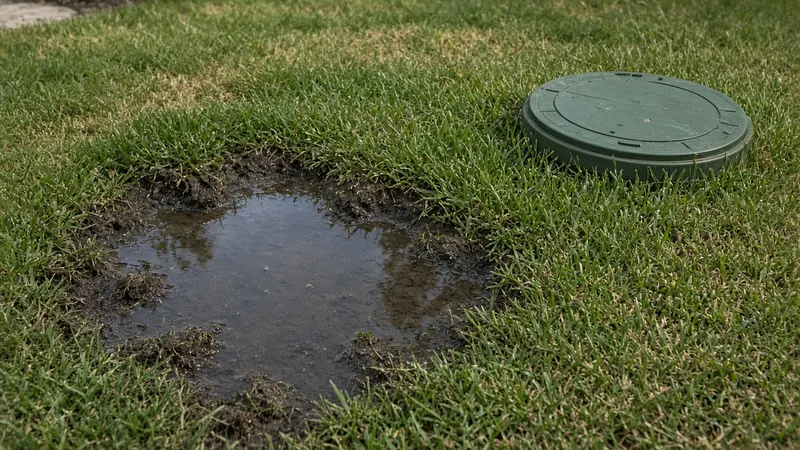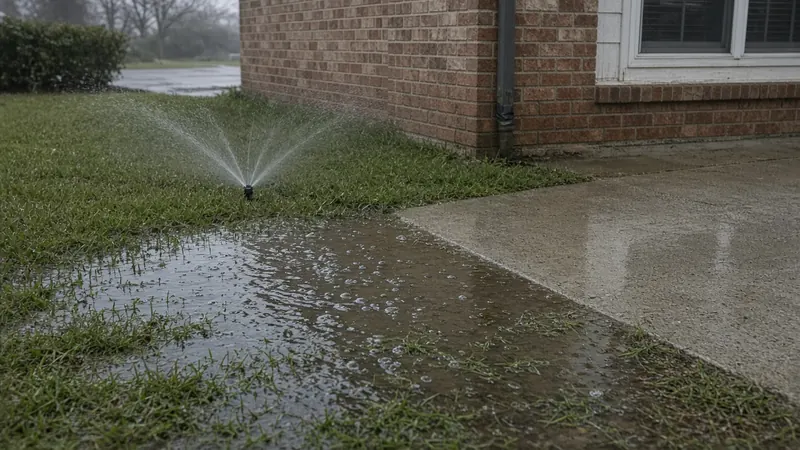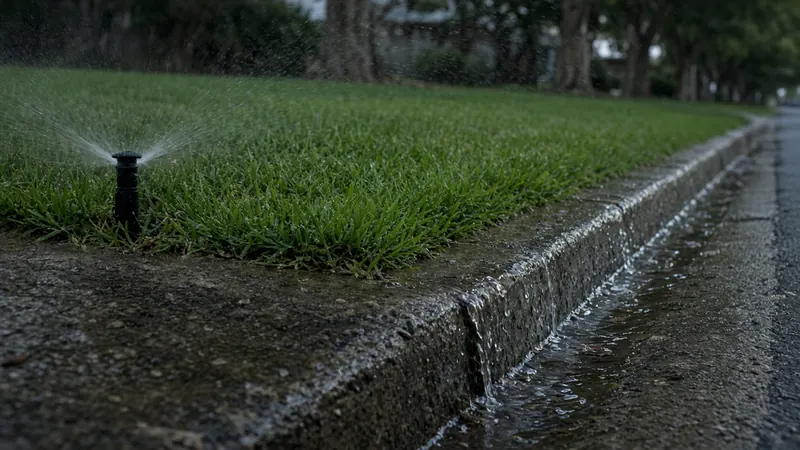
The call usually starts the same way: “Our water bill doubled and nobody’s home more than usual.” Indoors, a running toilet can do that. But in the Park Cities and north Dallas, the sprinkler system is a more common cause, because it moves a lot of water, it runs while you sleep, and most of it is underground where you cannot see it.
The City of Dallas says outdoor watering can be more than half of total summer water use, on its conservation ordinance page. When something goes wrong outside, the bill shows it.
The usual suspects
In rough order of how often we find them:
- A schedule that waters too much. Not a leak at all. The controller has old summer run times in October, or two programs that both run, or a “seasonal adjust” set to 150 percent. Every zone works fine. It just runs too long or too often.
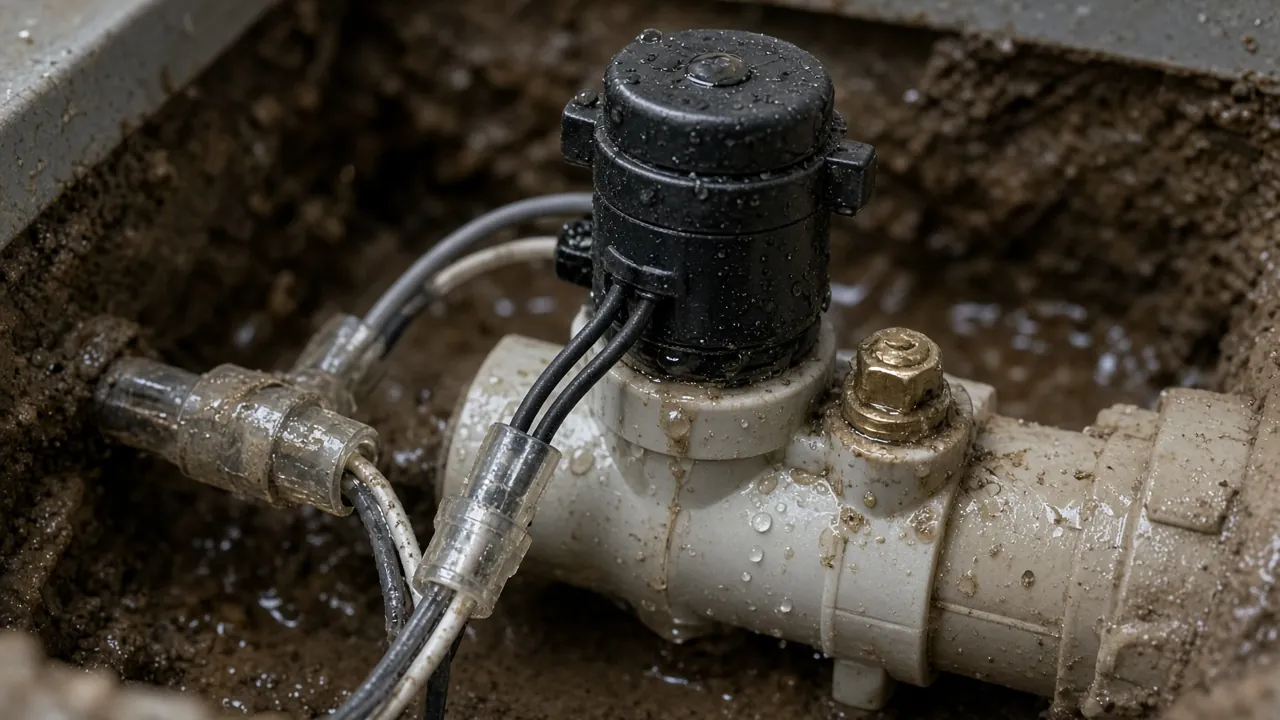
- A valve leaking through. One zone valve does not close all the way. Water seeps past it 24 hours a day and drains out the lowest head on that zone. The yard may look a little wetter in one corner and that is it.
- A main line crack. A pressurized pipe between the shut-off and the valves. These run all the time and can waste a great deal before they show at the surface in clay soil.
- A broken head or riser. A geyser during the cycle. Easy to spot if you are awake at 5 a.m. to see it.
- A rain sensor that does nothing. The system runs through every storm.
Start with the meter
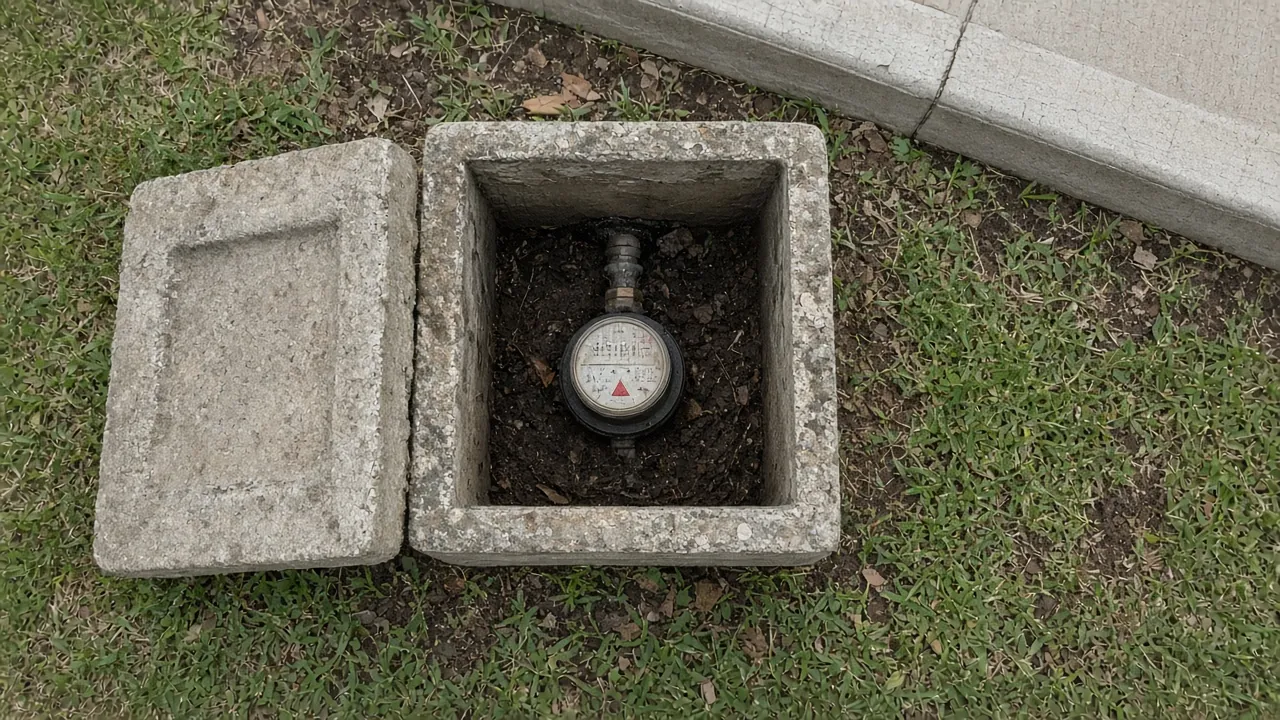
Before you look at anything else, do the leak check at the meter. Turn off all water in the house, make sure no zone is running, and watch the small leak indicator on the meter dial for a minute. If it moves, close the irrigation shut-off and watch again. If it stops, the leak is on the sprinkler side.
We walk through this in detail, with what to check next, in how to find a sprinkler leak.
If the meter is still, you probably do not have a leak. Look at the schedule next.
Then read the controller
Open the controller and go through every program. Write down, for each program:
- Watering days
- Every start time
- Run time for each zone
- Any seasonal adjust or water budget percentage
Then do the math. Multiply run times by start times by days per week. We regularly find systems running each zone three times a day on both watering days, because someone set three start times on a program that was already set up for cycle and soak.
Compare what you find to what your lawn needs. The City of Dallas irrigation checkup guide says most grasses need about one inch of water every five to ten days in the heat of summer. In spring and fall, much less. A free weekly recommendation from WaterMyYard gives you a number for your area.
How the bill is built, and why timing matters
Water rates in this area are tiered. The more you use in a month, the more each gallon costs.
Dallas. The Dallas Water Conservation FAQ says residential customers who use more than 15,000 gallons a month pay a higher rate on the gallons above that. It also explains how sewer charges work: because wastewater is not metered, Dallas estimates your sewer use from your average water use in December, January, February and March. If your actual use in a month is lower than that winter average, you are billed on the actual use.
That second part matters for sprinkler leaks. A leak that runs through the winter does not just raise your winter water bills. It can raise your winter average, and so your sewer charge for the months after. Running the sprinklers hard in December does the same thing. Winter is the cheapest time of year to fix an irrigation leak, and the most expensive time to ignore one.
University Park. The city’s Water Conservation Plan describes a conservation surcharge from May through October on use above 30,000 gallons in a month. Summer is exactly when a sprinkler problem pushes a bill over that line. The plan notes that rates are revised each year, so check the city’s website for current numbers.
Highland Park. Check the town’s utility billing page or your bill for current rate tiers.
Check the rain sensor
Most rain sensors have a test button or a spindle you can push. With a zone running, press it. The zone should stop within a few seconds. If it keeps going, the sensor is dead, unplugged or bypassed with a jumper wire at the controller. Dallas requires rain and freeze sensors on automatic systems, and a sensor that works will skip runs you do not need. See rain and freeze sensors.
Walk the zones
If the meter is still and the schedule looks reasonable, run each zone and walk it. Look for heads spraying pavement, heads that are missing, and zones where the spray looks weak. Weak spray on a zone with no visible leak often points to an underground break, and the water you are paying for is going into the clay.

The leak you cannot see
The worst bills we see come from a pressurized main line leak or a valve stuck partly open on a large lot. On a big Preston Hollow property, a main line can run a long way across the yard, under drives and beds, and a crack can stay hidden for a long time. The ground at the leak may never get soggy, because the water drains down into a void or along the trench.
Signs you might have one:
- The meter leak indicator moves with all zones off, and stops when you close the irrigation shut-off
- One zone has noticeably weaker spray than it used to
- A valve box always has water in it
- The bill went up and stayed up, month after month
That is the case where it pays to have someone trace it. We narrow it down zone by zone and section by section before digging. More on our leak repair page.
If a zone is running when it should not be
If you hear or see a zone running at a time it is not scheduled, or one zone will not stop, that is a valve or controller problem and it can run up a bill fast. Read what to do when a zone will not shut off.
Preventing the next surprise
- Read the meter once a month, with everything off, and note the reading. It takes two minutes.
- Change the schedule with the seasons. Lower run times in fall, very little in winter.
- Fix broken heads quickly. A geyser can run for every cycle until someone notices.
- Have the system walked once a year. A spring start-up is the natural time. See our spring checklist.
For Dallas customers in Preston Hollow, Bluffview, Greenway Parks, Devonshire and the M Streets, the city’s free irrigation evaluation is worth a call too.
Sources
- City of Dallas, Water Conservation Ordinance summary and Water Conservation FAQ
- City of Dallas Water Conservation, Irrigation System Checkup guide (PDF)
- City of University Park, Water Conservation Plan (PDF)
- Texas A&M AgriLife, WaterMyYard
Have a question this did not answer? Call 469-902-9800 and ask. More articles on the blog.