“How much does it cost to fix a sprinkler?” is the most common question we get on the phone, and the honest answer is that it depends on what is wrong and how hard it is to reach. A broken head on a parkway takes a few minutes. A leak under a driveway, or a valve buried under a bed nobody has seen in fifteen years, can take far longer.
We do not quote prices in articles. Instead, here are the factors that actually move the cost of a repair, and what you can do to keep it down.
1. Finding the problem
The biggest variable is often diagnosis, not the repair itself.
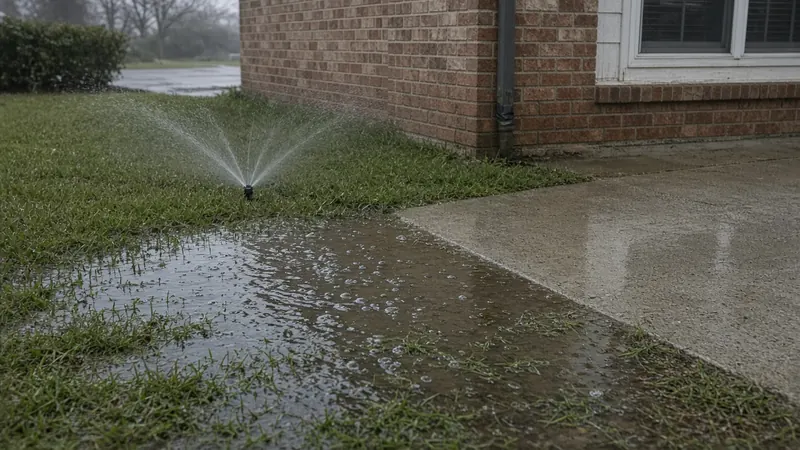
Easy to find: a broken head spraying water, a cracked riser, a zone you can see is not running.
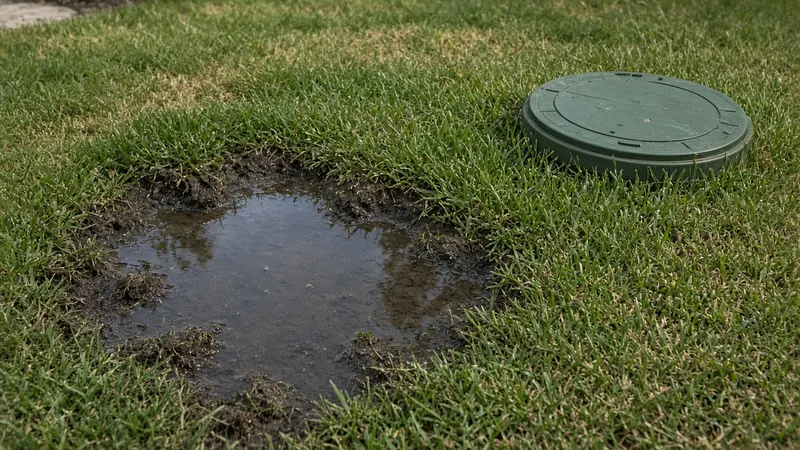
Harder to find: a slow leak in clay soil, a zone that comes on by itself, a zone that will not turn on, or an intermittent electrical fault. Clay holds water and spreads it sideways along old trenches, so a wet spot is not always above the leak. Our guide on finding a sprinkler leak explains why.
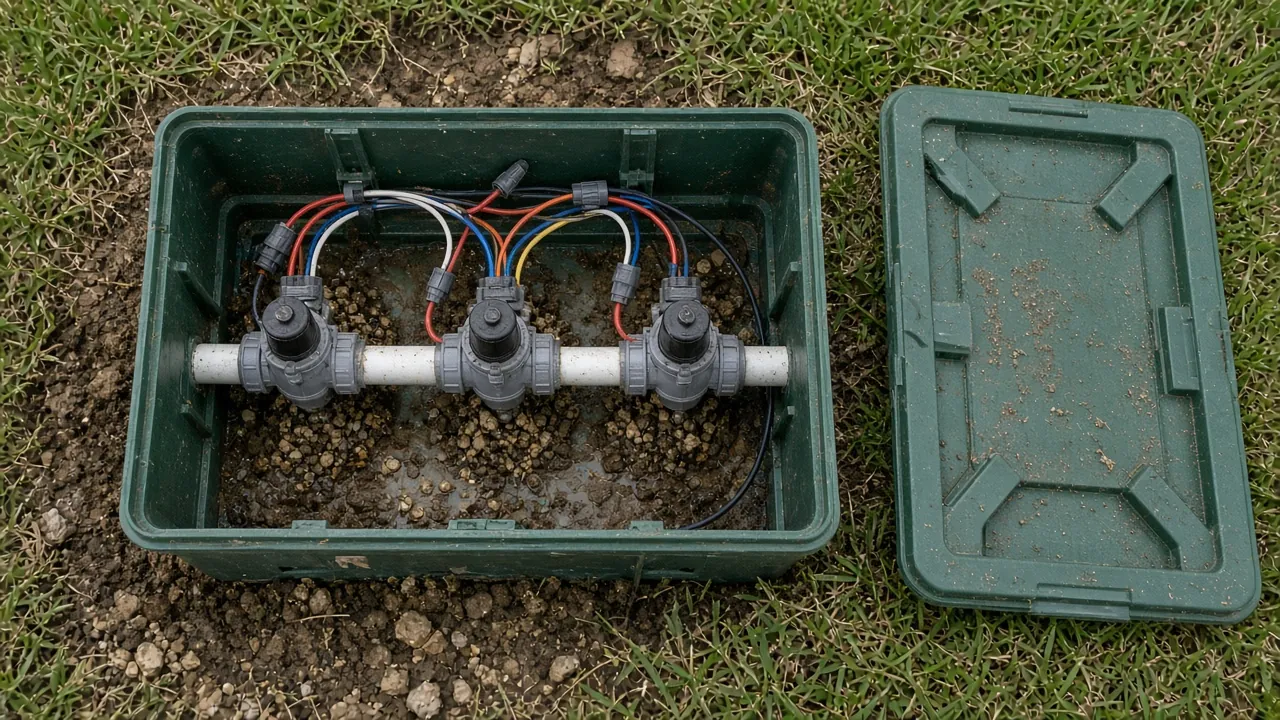
Hardest: lost valves and wire faults. A valve box that has been mulched over, sodded over or built over has to be located before it can be repaired. Wire faults between the controller and a valve may take tracing equipment.
You can shorten diagnosis by telling us what you have noticed: which zones, since when, and what changed recently, like new landscaping or a fence.
2. Access
Where the problem is matters as much as what it is.
- Open lawn: dig, fix, replace the sod.
- Under a bed: plants and mulch have to be moved and put back.
- Under hardscape: a line under a walk or a driveway may need to be rerouted around it rather than dug up.
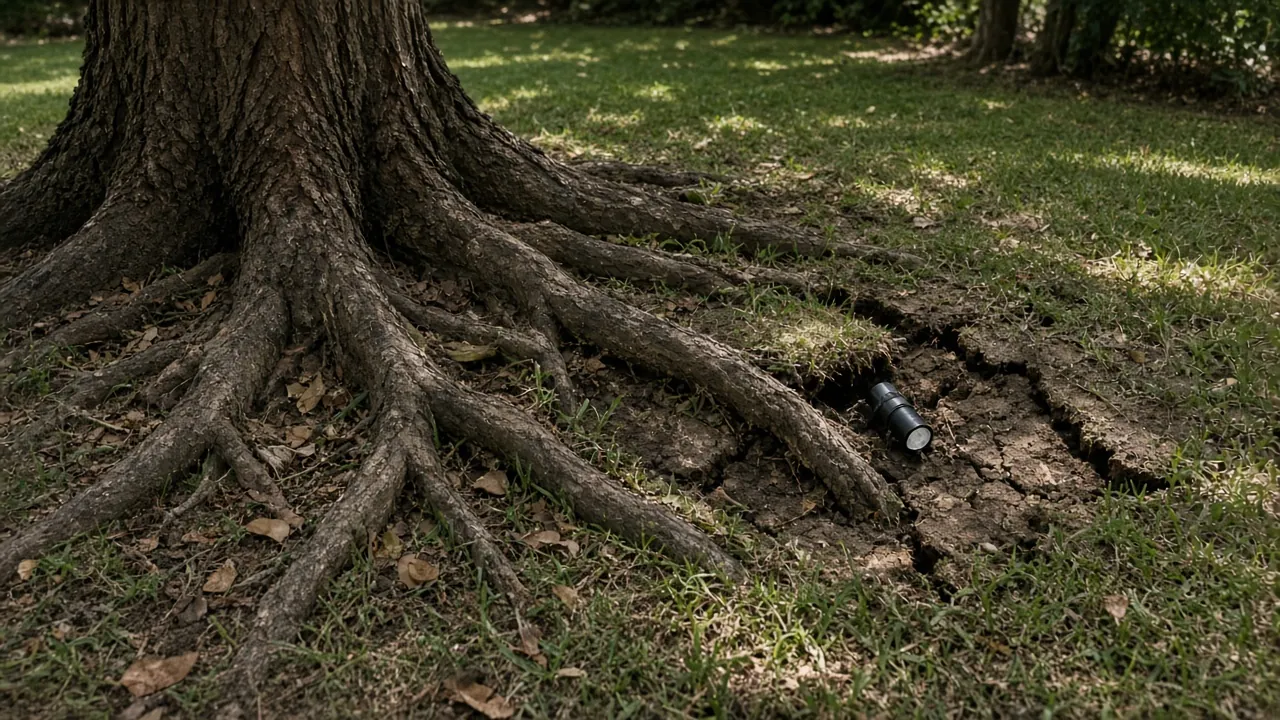
- Around tree roots: old oaks and pecans wrap roots around lines. Digging by hand around roots takes time, and the repair has to protect the tree. See the root photo below.
- Near other utilities: gas, electric and cable lines share the yard with sprinkler pipe. Texas law requires anyone digging to contact 811 two business days before digging, according to Texas811. Utilities mark their own lines, but Texas811 notes that private lines, such as the ones running from the meter to the house, are the property owner’s responsibility to locate, according to its homeowner FAQ. Sprinkler pipe is private, so care is needed.
3. Parts
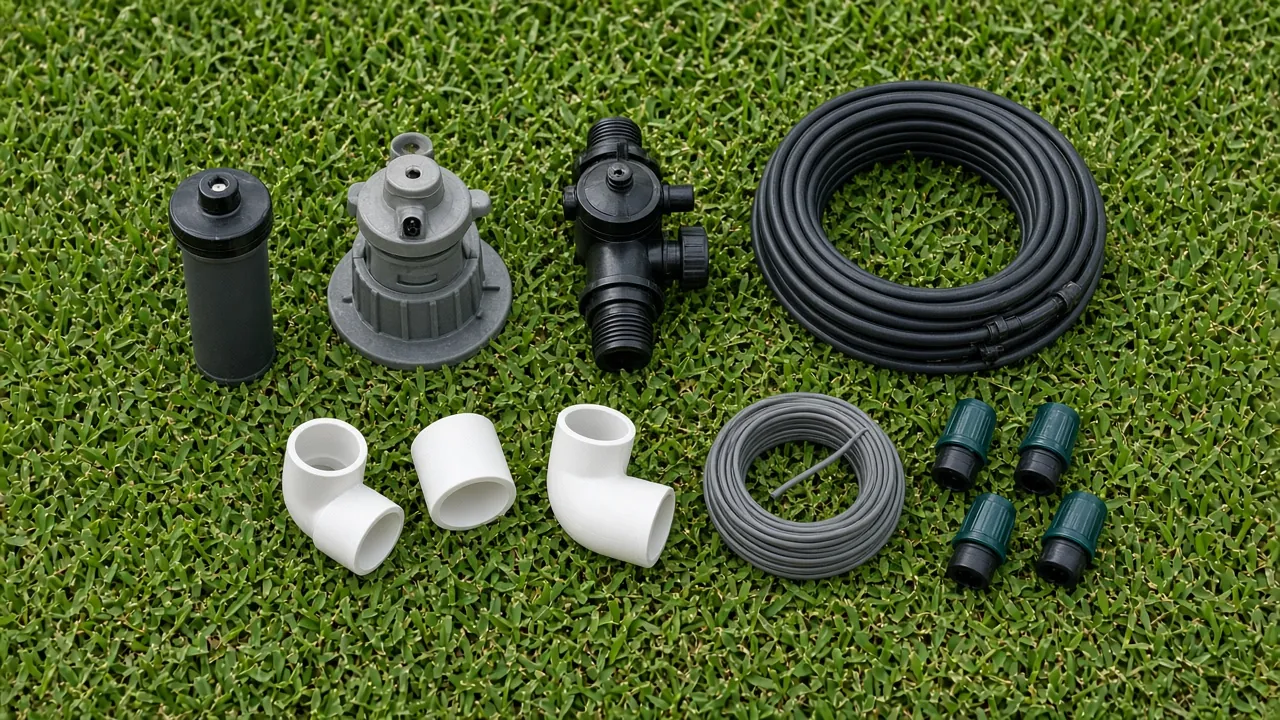
Parts are usually a smaller share of the bill than people expect, but some cost more than others.
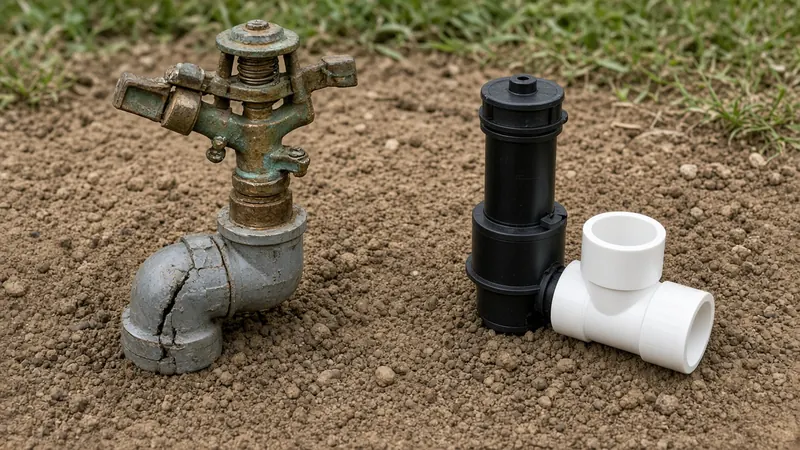
- Heads and nozzles are inexpensive. Matching the existing brand and nozzle on a zone matters more than price, because mixed nozzles water unevenly.
- Valves cost more, and valves with a manifold of several zones may need to be replaced together.
- Controllers range widely, from basic to weather-based smart models.
- Backflow assemblies are among the more expensive parts, and replacing one also requires a test by a licensed tester under 30 TAC §344.50.
4. Code triggers
Some repairs bring other requirements with them. These are not upsells. They are rules:
- Replacing a controller means adding a rain or moisture shut-off device if the system does not have one, per 30 TAC §344.62.
- Replacing, repairing or moving a backflow assembly requires a test by a licensed tester.
- In University Park, major mainline or valve work on an older system without backflow protection requires an approved assembly first, and digging at the meter or backflow device requires an isolation valve if one is not present, per Article 3.11 of the city code.
- Permits may be required for alterations or replacements, depending on the city.
Ask about these up front, so they are not a surprise.
5. The age and condition of the system
On an older system, one repair sometimes uncovers another. Brittle pipe cracks when it is dug up. A valve that is replaced may show the one next to it is failing too. Old wire splices that are not waterproof fail when disturbed. A good technician will tell you before going further, so you can decide. When repairs keep stacking up, it may be time to read repair or replace an old system.
6. How many things are wrong
One visit to fix five things costs less than five visits to fix one each. If you have noticed several problems, list them all when you call. A spring check-up is a good time to batch repairs; see our spring start-up checklist.
7. Urgency
A zone stuck on and flooding the yard is an emergency. A slightly dry corner is not. If water is running and you cannot stop it, shut off the irrigation supply first, then call. Our article on a zone that won’t shut off explains how. Stopping the water yourself turns an emergency into a scheduled repair.
What you can check before calling
- Run each zone from the controller and watch it. Note which zones have problems.
- Read the water meter with everything off to see if water is moving. Our high water bill article shows how.
- Find your valve boxes and the irrigation shut-off, if you can.
- Check the controller: is it powered, is the date and time right, and is a rain sensor holding it off?
- Take photos of anything broken or wet.
None of this is required, but it often shortens the visit.
Questions worth asking any company
- How do you charge for diagnosis, and for repair?
- Will you tell me before doing anything beyond what we discussed?
- What warranty do you give on parts and labor?
- What is the irrigator’s license number? Texas requires a TCEQ license for irrigation work done for others, and you can look it up from the TCEQ licensing page, which links to its license search.
If you are a Dallas Water Utilities customer, the city also offers a free irrigation system evaluation that can find leaks and scheduling problems.
When you are ready for a repair, call us and describe what you see. We will tell you what it most likely is and what to expect. Our sprinkler repair page covers what we check on a visit.
Sources
- 30 Texas Administrative Code §344.50, Backflow Prevention Methods
- 30 Texas Administrative Code §344.62, Minimum Design and Installation Requirements
- City of University Park, Code of Ordinances, Article 3.11, Irrigation Systems
- Texas811, Homeowner guide and Homeowner FAQs
- Texas Commission on Environmental Quality, Occupational Licensing
- City of Dallas, Free Irrigation System Evaluations
Have a question this did not answer? Call 469-902-9800 and ask. More articles on the blog.