People do not usually connect mosquitoes with their sprinkler system. But mosquitoes lay eggs in or near water, and the CDC’s advice for controlling them at home starts with getting rid of standing water: once a week, empty, scrub, turn over, cover or throw out anything that holds water, according to its page on mosquito control at home. The CDC also notes mosquitoes can complete their life cycle in about a week, in its guidance on what you can do during an outbreak.
A system that runs twice a week and leaves water sitting in the yard in between can keep that cycle going. Here is where sprinkler water tends to collect, and how to fix it.
1. Flooded valve boxes
Open a few valve boxes in late summer and you will often find water sitting in them, sometimes up over the valves. A valve box is a plastic shell with an open bottom, set in the lawn. It should drain into gravel below. In clay soil it often does not.
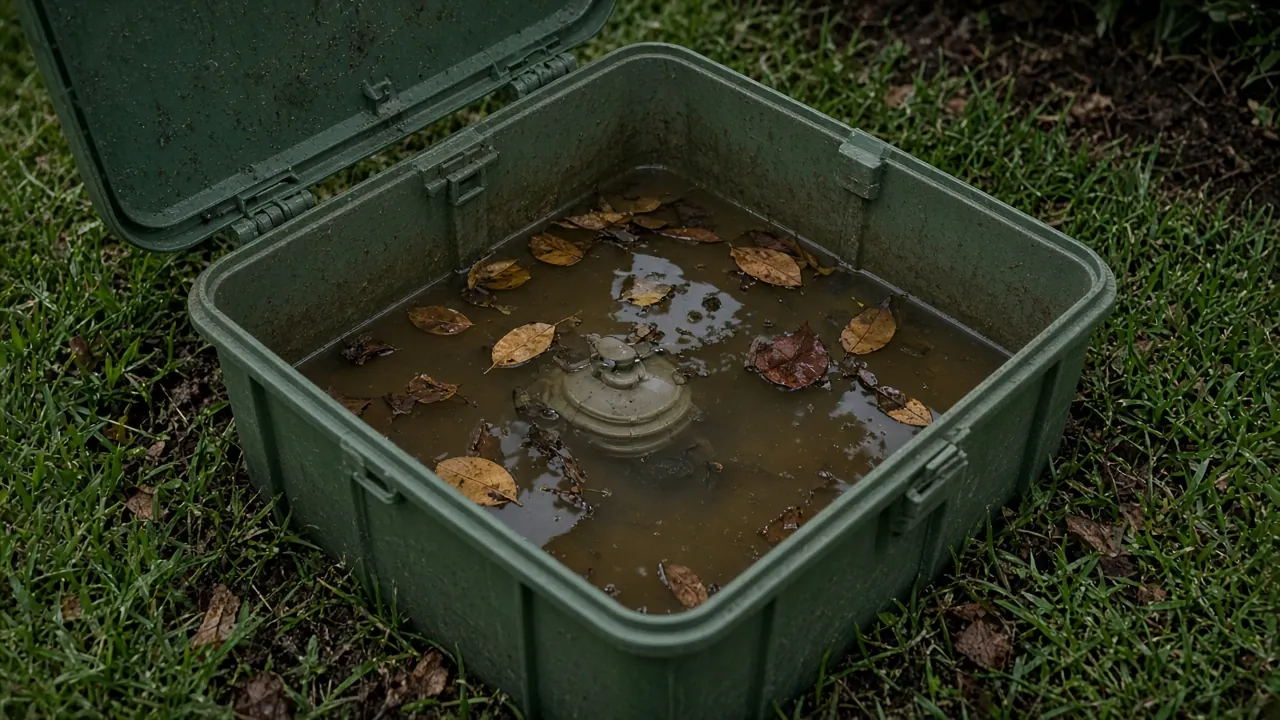
Causes:
- A leaking valve or fitting inside the box keeps it full.
- No gravel under the box, or gravel clogged with clay over the years.
- The box sits in a low spot where surface water collects.
- A cracked or missing lid lets in rain and debris.
Fixes: repair any leak first. Then clean out the box, add gravel below the valves, and make sure the lid fits. If the box is in the low point of the yard, it may need to be raised or moved when the valve is next serviced. Flooded boxes also make valves harder to work on and wires corrode faster, which is one more reason to fix them. Our valve repair page covers the work.
2. Low spots that stay wet
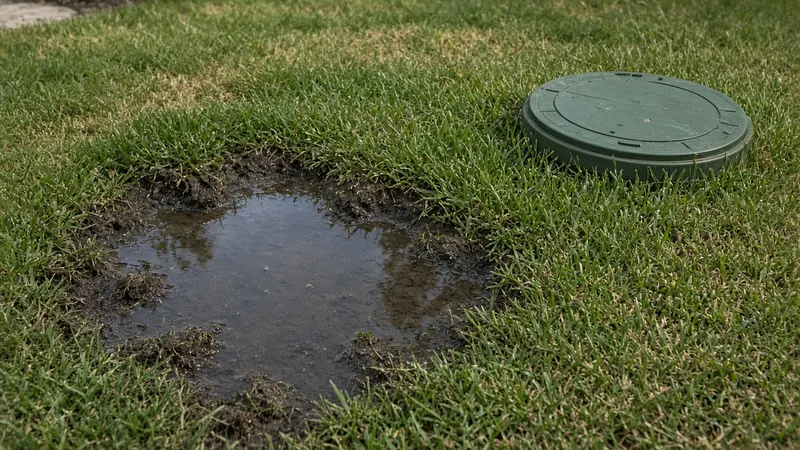
A low spot in the lawn that is soggy days after watering has one of a few causes:
- A slow leak in a lateral line nearby. In clay, water can travel along the original trench and come up somewhere else. See how to find a sprinkler leak.
- Low-head drainage. When a zone shuts off, the water left in the pipe drains out of the lowest head. On a sloped yard, the head at the bottom can leave a puddle after every cycle. Check-valve heads or check valves at the low heads stop it.
- A valve that does not fully close, so a little water keeps seeping out of the lowest head on that zone. See a zone that won’t shut off.
- Plain overwatering. Too much run time on clay, which takes water in slowly.
Fixing low-head drainage
Low-head drainage is worth a closer look, because it is common on the sloped lots near Turtle Creek and in Bluffview. After a zone shuts off, the pipe is still full of water. Gravity pulls that water to the lowest point on the zone, and it seeps out of whichever head sits lowest. On a long slope that can be a lot of water, after every cycle, in the same spot.
You can confirm it by watching the zone shut off. If one head at the bottom keeps trickling for minutes after the others stop, that is low-head drainage. The fix is a head with a built-in check valve, which holds water in the riser, or a check valve installed under the head. It is a small part, and it ends both the puddle and the mosquito habitat.
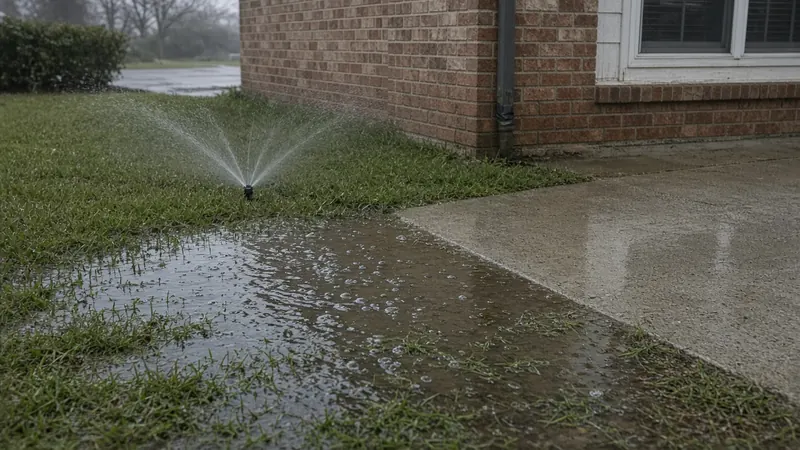
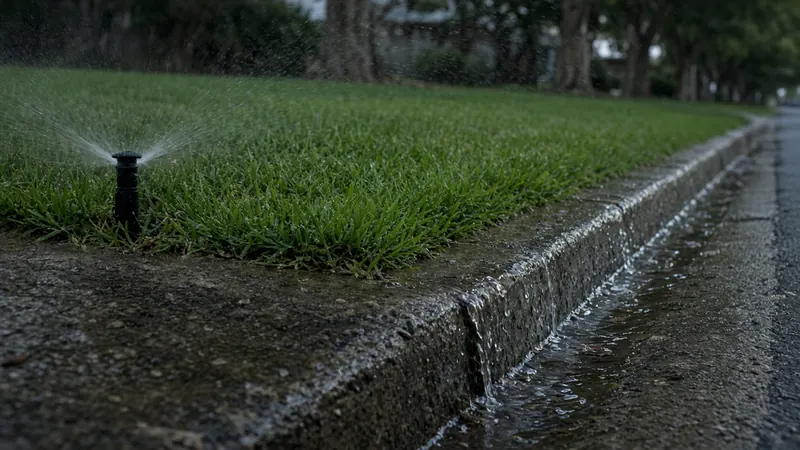
3. Runoff collecting in gutters, drains and pavers
Water that runs off the lawn has to go somewhere. It collects at the curb, in the street gutter, in yard drains and between pavers. The City of Dallas lists runoff into the street and spraying driveways, sidewalks and streets among the things its water conservation ordinance prohibits, according to its ordinance summary. Texas design rules for new systems also prohibit spraying water onto impervious surfaces, per 30 TAC §344.62.
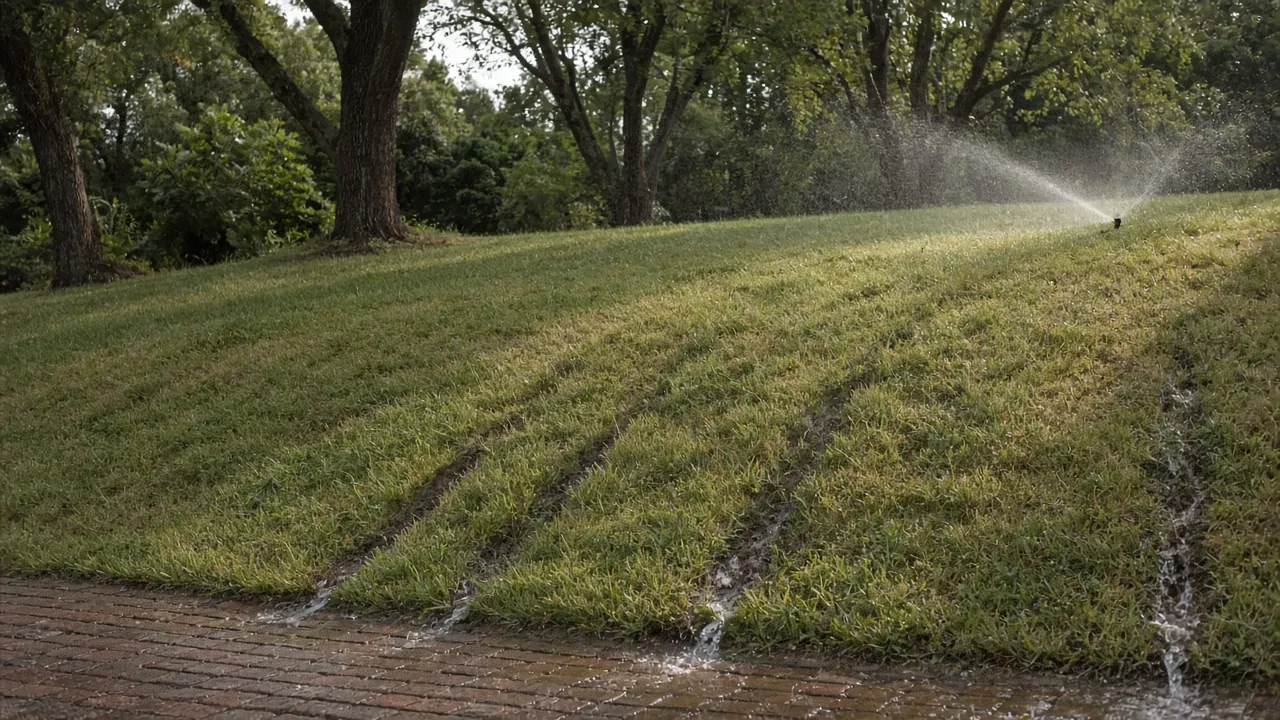
The fix is usually a schedule change, splitting run time into shorter cycles so clay can absorb it, which we explain in cycle and soak, plus adjusting or replacing heads that spray pavement.
4. Plant saucers, pots and bed edges
Pots on a drip line or under a spray head often sit in saucers that fill every cycle. The CDC specifically lists flowerpot saucers among the containers to empty weekly. If pots are on irrigation, check the saucers, or take them off.
Beds with edging or borders can also hold water at the low end if the bed is overwatered. Converting beds to drip usually ends it. See drip for flower beds.
5. Yard drains that do not drain
Some lots have French drains or catch basins that carry water to the street or the gutter system. Sprinkler overspray and runoff can keep them wet, and a clogged drain with a sump holds water for days. Clean out grates and catch basins, and make sure heads near drains are not spraying into them.
6. Water in the meter box
A water meter box that is full of water may have a leak at the meter connection or on your side of the meter. Your water provider owns the meter and the connection on its side, so call them if the leak is at the meter itself. If the leak is on your side, read the meter with everything off to see if water is moving. Our high water bill article explains how.
A late-summer walk-around
Once a week in mosquito season, the CDC advice is to check for anything holding water. Add these sprinkler checks to that walk:
- Lift two or three valve box lids. Any standing water?
- Look at the lowest spots in the yard the day after watering.
- Check the curb and gutter in front of the house after a cycle.
- Empty plant saucers.
- Check yard drain grates.
If you find a valve box or low spot that stays wet, there is usually a leak or a schedule problem behind it. We can find it and fix it. Contact us, or see our leak repair service.
Bigger water, bigger problems
Standing water that does not go away also softens clay soil under walkways and near foundations, invites fungus in the lawn, and wastes water you pay for. Fixing it is worth it even apart from mosquitoes. For health questions about mosquitoes and the diseases they carry, follow the CDC and your local health department, not a sprinkler company.
Sources
- Centers for Disease Control and Prevention, Mosquito Control at Home
- Centers for Disease Control and Prevention, What You Can Do to Control Mosquitoes During an Outbreak
- City of Dallas, Water Conservation Ordinance summary
- 30 Texas Administrative Code §344.62, Minimum Design and Installation Requirements
Have a question this did not answer? Call 469-902-9800 and ask. More articles on the blog.