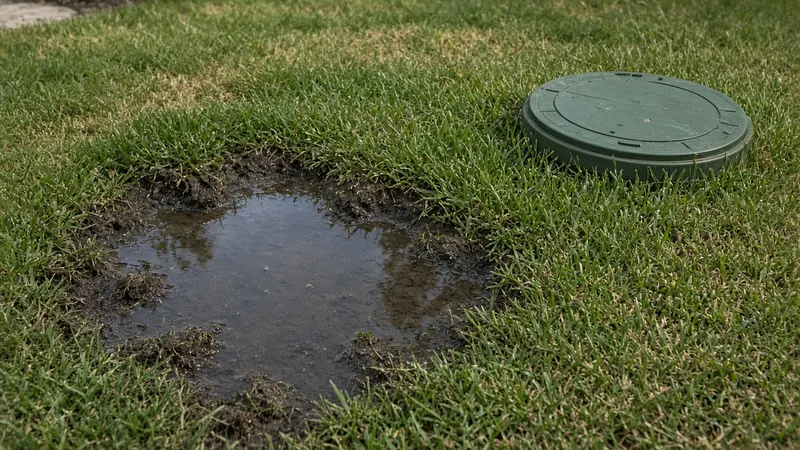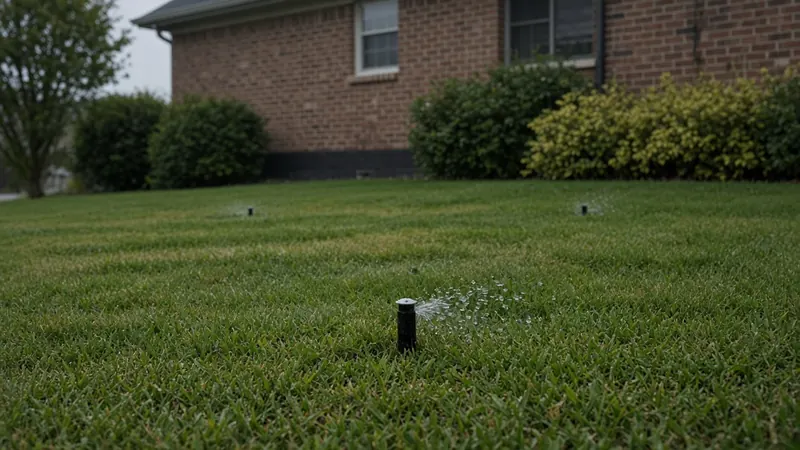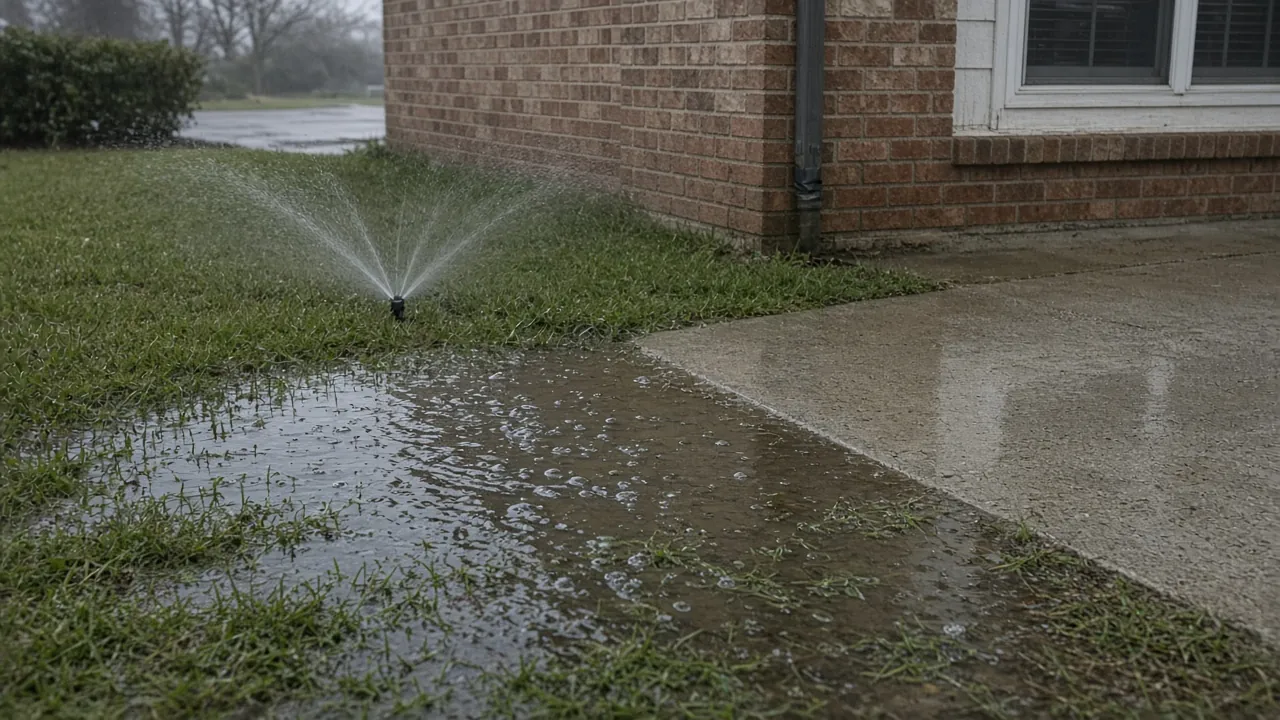
A zone that will not shut off is the most urgent sprinkler call we get, because it wastes water every minute and it can flood a yard, a basement window well or a neighbor’s driveway. The good news is that stopping it takes about two minutes once you know where to go.
First: stop the water
1. Turn the controller off. Set the dial or the app to Off. On some controllers, also unplug it or flip the breaker. Wait a minute.
If the zone stops, the controller was sending power to that valve. Skip ahead to “If the controller was the problem.”
If the zone keeps running with the controller off and unplugged, the valve is stuck open. The controller has nothing to do with it now.
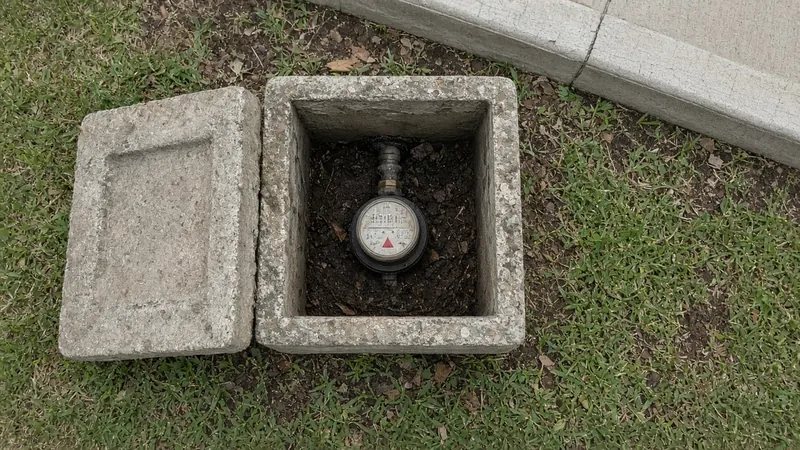
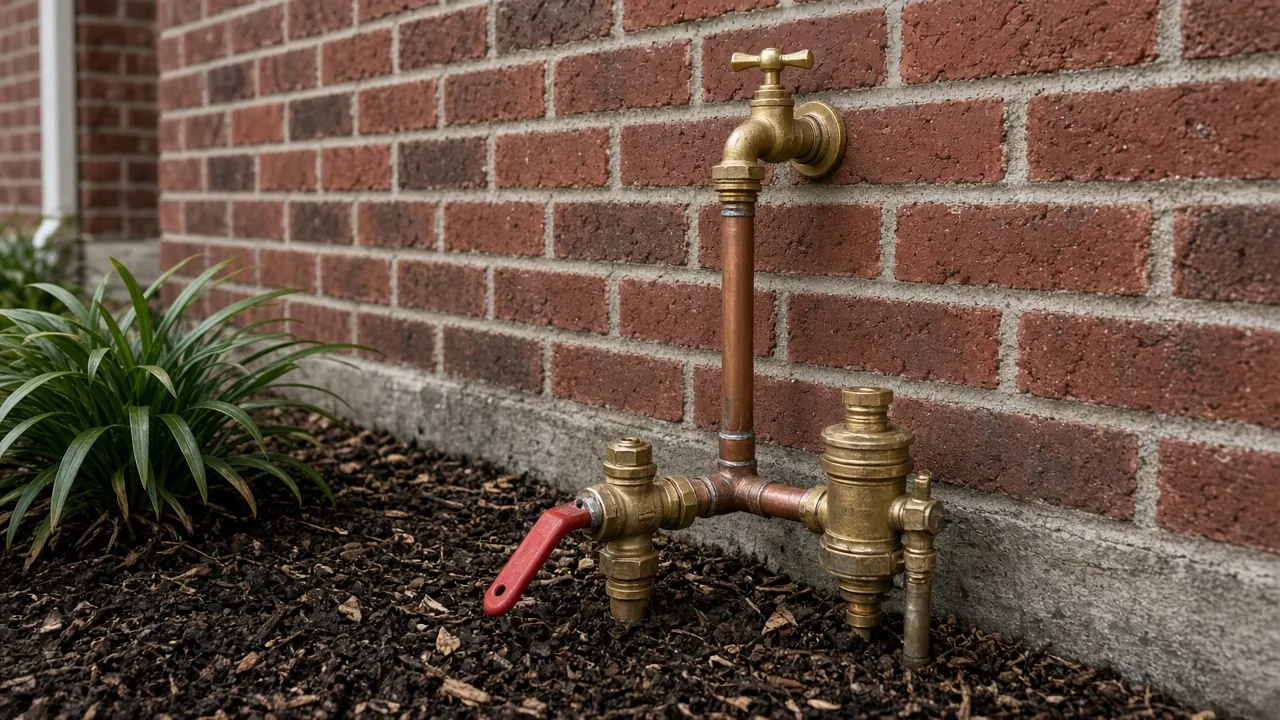
2. Close the irrigation shut-off. This is the valve between your water meter and the backflow preventer. On most Park Cities homes, it is either next to the backflow device near the house, or in a box near the water meter. It may be a lever-handle ball valve, a round gate valve, or a valve you need a key or pliers to turn. Turn it fully closed.
That stops all water to the sprinkler system. The house still has water.
3. If you cannot find the irrigation shut-off, you can close the main valve at the water meter. That shuts off the house too, so it is a last resort. Many meter valves need a meter key.
If none of that works, call us at the number at the top of this page and we will talk you through it.
Why a valve sticks open
Each zone has an electric valve, usually in a green plastic box in the yard. When the controller sends 24-volt power to the solenoid on top of the valve, a small passage opens, pressure shifts across a rubber diaphragm, and the valve opens. When power stops, the solenoid closes the passage and water pressure pushes the diaphragm shut.
A valve that will not close usually has one of these problems:
- Debris under the diaphragm. A grain of sand or a chip of PVC from a recent repair can hold the diaphragm off its seat. This is common right after any line repair, when dirt gets into the pipe.
- A torn or worn diaphragm. Rubber ages. On a valve that is 15 or 20 years old, the diaphragm may simply have failed.
- A stuck solenoid plunger. The little plunger inside the solenoid can stick in the open position.
- The manual bleed is open. Many valves have a small screw or lever on top that opens the valve by hand. Someone may have opened it to test the zone and left it.
- The flow control is turned down so far the valve cannot close properly. Less common, but we see it.
- A cracked valve bonnet or body. Freezes and clay movement can crack the valve itself.
What you can check yourself
With the water shut off, open the valve box for the zone that ran. Look for:
- The bleed screw or lever on top of the valve. If it is loosened or flipped, close it.
- The solenoid. Turn it a quarter turn clockwise by hand to make sure it is snug. Do not force it.
- Obvious cracks or a valve sitting in water.
Then open the irrigation shut-off slowly and watch. If the zone stays off, you may have fixed it. If it starts running again, close the shut-off and leave it for a repair.
We do not recommend taking the valve apart yourself unless you have done it before. The bonnet screws are easy to strip, and reassembling the diaphragm wrong will cause the same problem. On our valve repair page we explain when a valve can be rebuilt and when it should be replaced.
If the controller was the problem
If turning off the controller stopped the zone, the valve is probably fine. The controller was telling it to run. Possible causes:
- A program with a start time you did not know about. Look through every program, not just A.
- A manual run that never ended. Some controllers keep running a manual cycle until you cancel it.
- A failed zone output. The controller’s circuit for that zone can fail in a way that sends power all the time. This shows up when the zone runs even with no program active.
- A wiring fault. Damaged wire touching another wire can energize a valve. This is rare, but we see it after landscaping or trenching work.
A quick test: with the controller on but no programs running, disconnect the zone’s wire from the terminal. If the zone stops, and it starts again when you reconnect it with nothing scheduled, the controller is at fault. Our controller and wiring repair page covers what happens next.
Water running from one head after the zone stops
This is not the same problem. When a zone shuts off, the water left in the pipe drains out the lowest head. A few minutes of trickle is normal, especially on sloped yards like those in Bluffview and parts of Highland Park.
If that low head runs for hours, the valve upstream may be leaking through slightly. That is a smaller version of the stuck-valve problem. A check valve in the low head can stop normal drainage, but it will not fix a leaking valve.
How much water does a stuck valve waste?
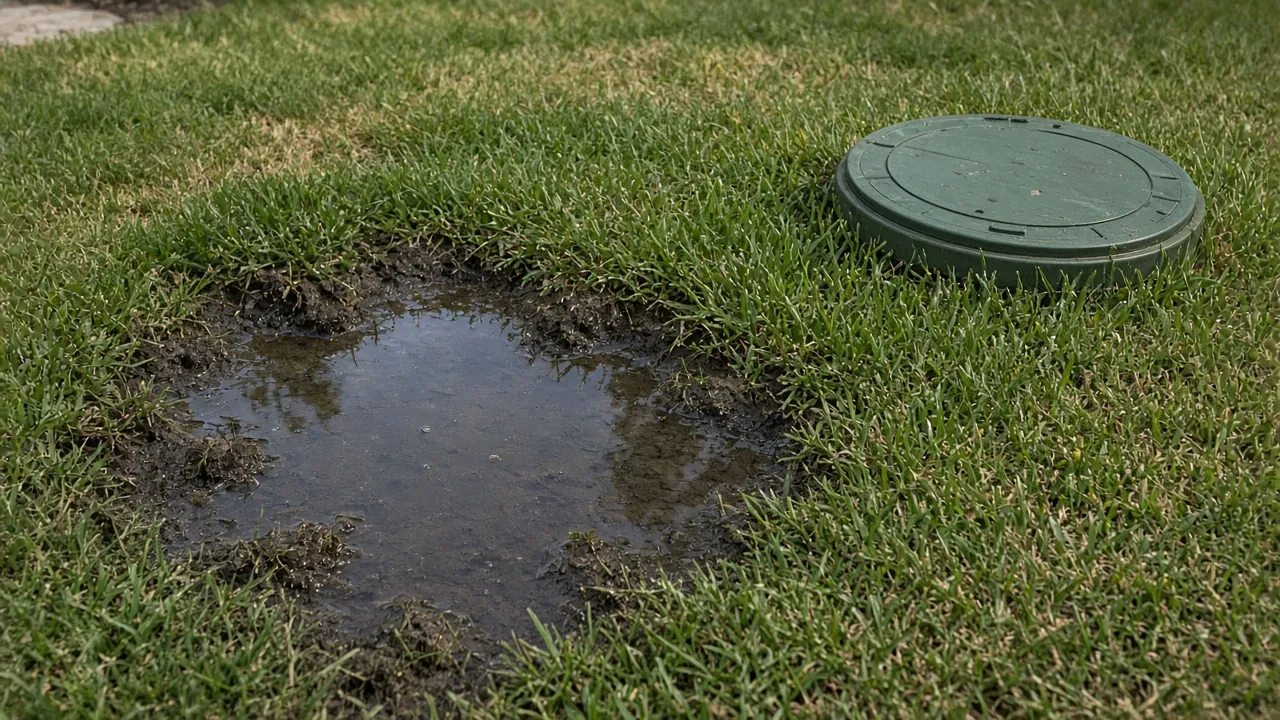
It depends on the zone. A single spray zone on a residential system typically flows several gallons per minute, and a stuck valve runs every minute of the day and night. Even a few hours adds up. That is why the first step is always to stop the water, then figure out the cause. If you found out from the water bill, read high water bill? check the sprinklers.
In Dallas, water running into the street can also be a violation of the conservation ordinance, which lists fines starting at $250 after a warning. Nobody will fault you for an emergency you are fixing, but it is one more reason not to leave it running.
After the repair
Once the valve or controller is fixed:
- Run that zone and watch it shut off on time.
- Check the meter leak indicator with all zones off.
- Look at the low end of the zone the next morning.
- If the problem started after a recent line repair, ask for the other valves on that line to be checked. Debris tends to travel.
A zone that will not shut off is almost always a single bad part. It just happens to be an expensive part to ignore. If you also see a zone with weak spray, read about low pressure on one zone. And if the water has been running for a while and you cannot see where it went, our guide on finding a sprinkler leak will help.
Sources
- City of Dallas, Water Conservation Ordinance summary
- 30 Texas Administrative Code §344.62, Minimum Design and Installation Requirements
Have a question this did not answer? Call 469-902-9800 and ask. More articles on the blog.