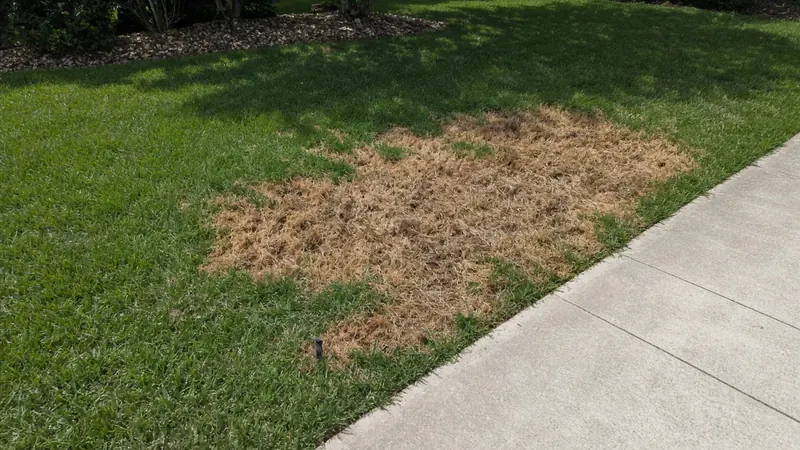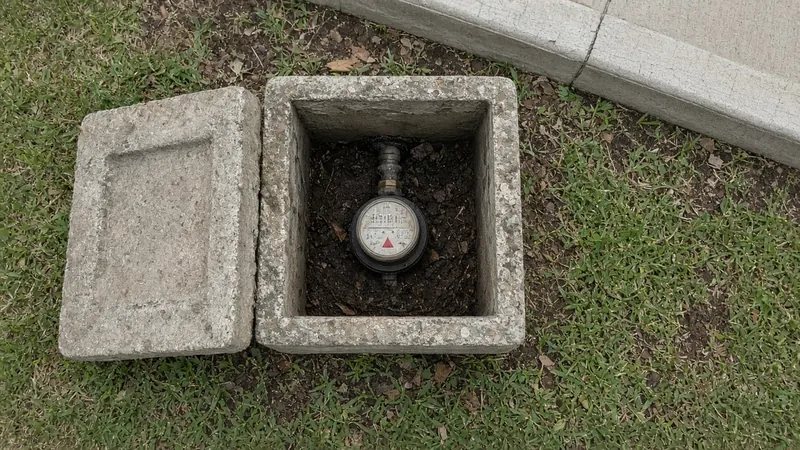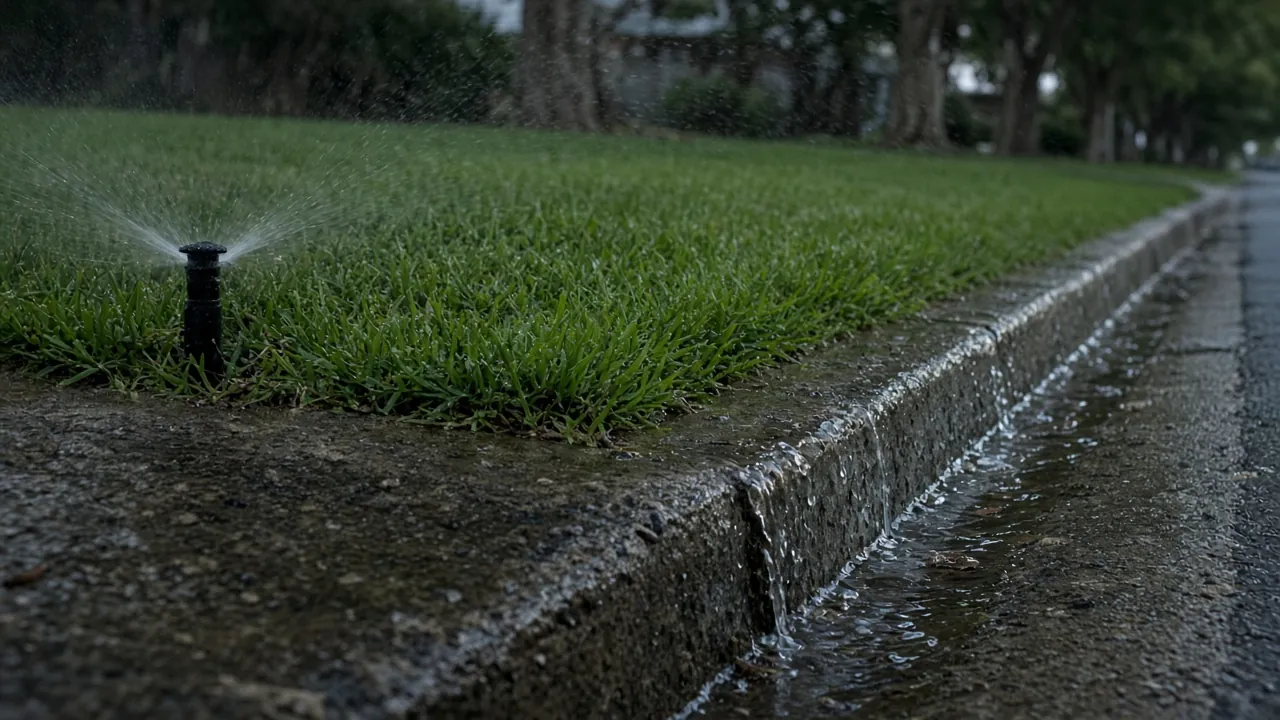
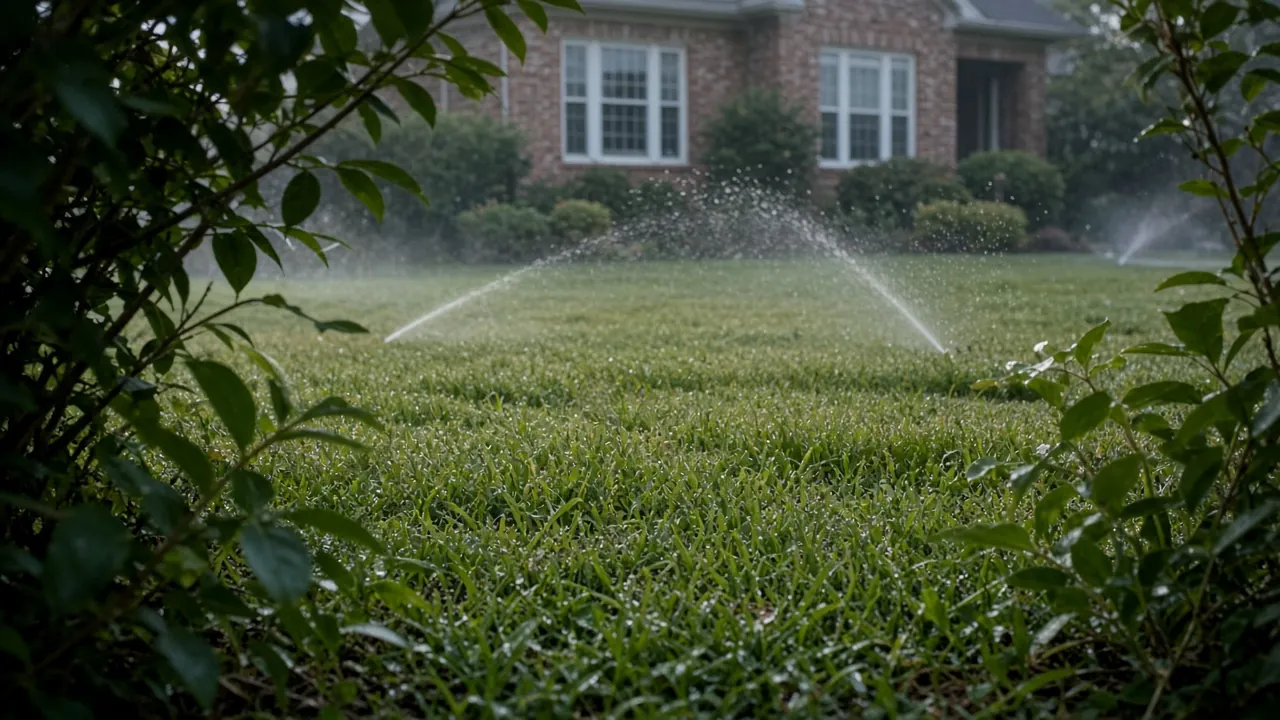
Stand on the sidewalk in University Park at 6 a.m. in July and you can watch it happen. A zone of spray heads starts, the grass looks wet within a couple of minutes, and by minute eight there is a thin stream running down the curb. The lawn is not full. The soil just cannot take water as fast as the heads are putting it down.
That is the single most common watering problem we see in the Park Cities and north Dallas, and the fix costs nothing. It is called cycle and soak.
What makes our soil different
Much of Dallas County sits on dark Blackland Prairie clay. Clay particles are tiny and packed tight, so water moves into the soil slowly. Once it is in, clay holds it well, which is good. Getting it in is the problem.
The City of Dallas sums this up in its irrigation checkup guide: clay soil, the “black gumbo,” cannot absorb water quickly, and short watering cycles are the way around it. The same guide says most grasses need only about one inch of water every five to ten days in the heat of summer.
One inch every five to ten days. Many systems we check are putting down far more than that, and much of it runs off.
Spray heads vs. rotors
Your lawn zones probably use one of two kinds of heads.
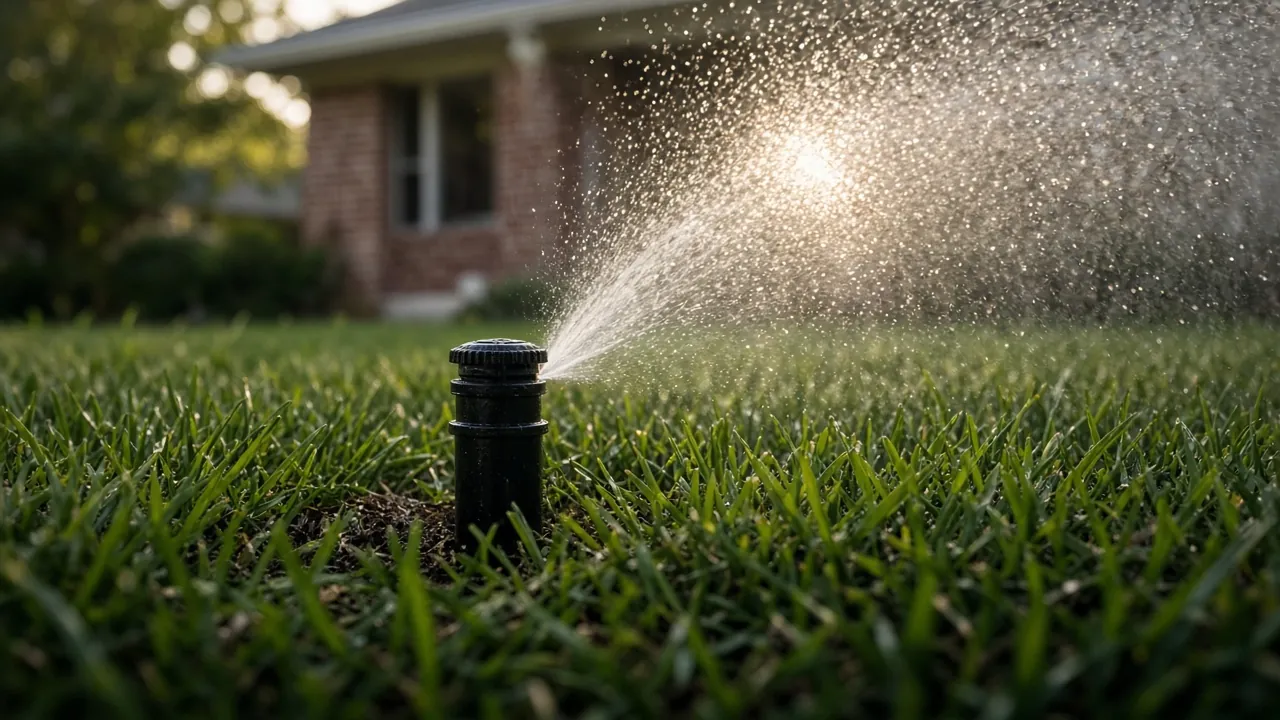
Spray heads throw a fixed fan of water and put it down fast. They are common in narrow parkways, side yards and small front lawns. On clay, a spray zone often starts running off within five to ten minutes.
Rotor heads throw a single stream that turns slowly across the lawn. They put water down much more slowly, so they need longer run times, but they also run off later.
That difference matters when you set the controller. A 20-minute run might be right for a rotor zone and far too long for a spray zone. If both kinds are on the same zone, the zone cannot be set correctly for either, which is one of the things we fix on a full system repair.
How cycle and soak works
Instead of running a zone once for 15 minutes, you run it three times for 5 minutes, with a break between each run. The total water is the same. The difference is that each short run soaks in before the next one starts.
On most controllers, you do this one of two ways:
- Built-in cycle and soak. Many newer standard and smart controllers have a setting where you enter the maximum run time before runoff and the minimum soak time. The controller splits the run for you.
- Multiple start times. On simpler controllers, give the program two or three start times about an hour apart, and set each zone to a third of its total time. Zone 1 runs, then the rest, then the controller comes back around to zone 1 again.
Multiple start times are fine under the watering rules. The rules count days, not start times. Just make sure the last cycle ends before the daytime cutoff. In Dallas that is 10 a.m. all year, and in University Park and Highland Park it is 10 a.m. from April through October. Our watering rules guide has the details for each city.
Find your runoff time
You need one number for each lawn zone: how many minutes it runs before water starts leaving the lawn.
- Pick a morning when the soil is fairly dry.
- Run one zone by itself from the controller.
- Watch the low edge of that zone: the curb, the driveway, the bottom of a slope.
- When you see water start to sheet or trickle off, note the minutes. That is your cycle length for that zone.
Spray zones on flat clay often land around five to seven minutes. Rotors are often double that or more. Slopes, like the ones toward Turtle Creek in Highland Park and in Bluffview, run off sooner.
Soak time between cycles is less exact. An hour is a good start. If you still see runoff on the second cycle, stretch the soak.
Measure what you are putting down
Run time tells you nothing until you know how much water a zone puts down per minute. The easy way to find out is a catch-can test.
- Set out six to ten straight-sided containers across one zone. Tuna cans or identical plastic cups work. Put some near heads and some between them.
- Run the zone for a fixed time, say 15 minutes.
- Measure the depth of water in each can with a ruler.
- Average them. If the average is a quarter inch in 15 minutes, that zone needs about an hour of total run time to put down one inch.
The cans also tell you something else. If one can has twice as much as another, coverage on that zone is uneven. No schedule fixes that. It takes head work: matching nozzles, fixing tilted or sunken heads, or adding a head where there is a gap. Uneven coverage is behind a lot of brown spots that people try to fix with more water.
The screwdriver test
After a full watering, wait a few hours and push a long screwdriver into the lawn. In moist clay it should slide in four to six inches without much force. If it stops at an inch or two, the water is not getting deep. Either the run time is too short, or it is running off before soaking in.
Try this in a few places, especially in the sunny part of the yard and under trees. Shade lawns often stay wet far longer than sun lawns on the same zone.
A sample summer schedule
Here is how we might set a typical University Park lot with three spray zones in front and two rotor zones in back, during a hot dry stretch in July. These are example numbers. Yours depend on your catch-can results.
| Zone | Type | Per cycle | Cycles | Total |
|---|---|---|---|---|
| 1 Parkway | Spray | 5 min | 3 | 15 min |
| 2 Front lawn | Spray | 6 min | 3 | 18 min |
| 3 Side yard | Spray | 5 min | 2 | 10 min |
| 4 Back lawn | Rotor | 15 min | 3 | 45 min |
| 5 Back shade | Rotor | 10 min | 2 | 20 min |
Start times of 4:00, 5:15 and 6:30 a.m. on your two allowed days would finish well before 10 a.m.
In spring and fall, cut those times down a lot, or skip weeks entirely after rain. WaterMyYard will send you a weekly number based on local weather if you do not want to guess.
What a schedule cannot fix
If you set up cycle and soak properly and still see these, the system needs repair, not new settings:
- One spot that stays soggy while the rest of the zone is fine. That is usually a leak or a low head draining. See how to find a sprinkler leak.
- A zone where some heads barely pop up. That points to low pressure, a partly closed valve or a broken line. Our article on low water pressure on one zone walks through it.
- Heads that spray the sidewalk no matter how you aim them. Wrong nozzle, wrong head or a head too close to the pavement.
Those are the calls we handle on broken head repair and leak visits.
The short version
Water early. Water deep, but in short pieces. Measure before you guess. Cut back hard when it rains. On clay soil, doing those four things will make a bigger difference in how the lawn looks than any fertilizer, and the water bill usually drops at the same time.
Sources
- City of Dallas Water Conservation, Irrigation System Checkup guide (PDF)
- City of Dallas, Water Conservation FAQ
- Texas A&M AgriLife, WaterMyYard
Have a question this did not answer? Call 469-902-9800 and ask. More articles on the blog.