In the Park Cities, the lawn usually starts greening up sometime in March, and that is when most people turn the sprinklers back on, or notice for the first time in months that they never turned them off. Either way, spring is the right time to look at the whole system before the heat arrives.
This is the same order we follow on a spring start-up. You can do most of it yourself with a screwdriver, a flag or two and about an hour.
1. Look at the backflow device and shut-off first
Before any water goes into the system, check the backflow preventer near the house or meter. If you covered it for winter, take the cover off. Look for:
- Cracks in the brass body or the bonnet on top
- Test cocks left open from a winter drain
- Valve handles left at a half-open angle
If you drained it before a freeze, close the test cocks and turn the handles back to open, parallel with the pipe. Then open the irrigation shut-off slowly and watch for a minute. Spraying or steady dripping means a part cracked. Close the shut-off and see our backflow repair page.
If you had a hard freeze this winter and did not prepare for it, look extra closely. Our freeze prep article explains where the damage usually is.
2. Wake up the controller
Check the date and time. Power outages and dead backup batteries wipe both. Then look at every program, not just Program A. It is common to find a forgotten program with its own start times that runs zones on days you never intended.
On a smart controller, check that it is online, that the address is right, and that the watering days match your city. In Dallas, that means no Monday, Tuesday or Friday and nothing from 10 a.m. to 6 p.m. any time of year. University Park and Highland Park have their own rules, covered in our watering rules guide.
3. Run each zone and walk it
This is the core of the check. Start zone 1 manually, walk out to it, and watch the whole cycle. Then the next zone. For each one, look for:
- Heads that do not pop up, or pop up only partway
- Heads that stay up after the zone stops
- Geysers or bubbling, which usually means a missing head or broken riser
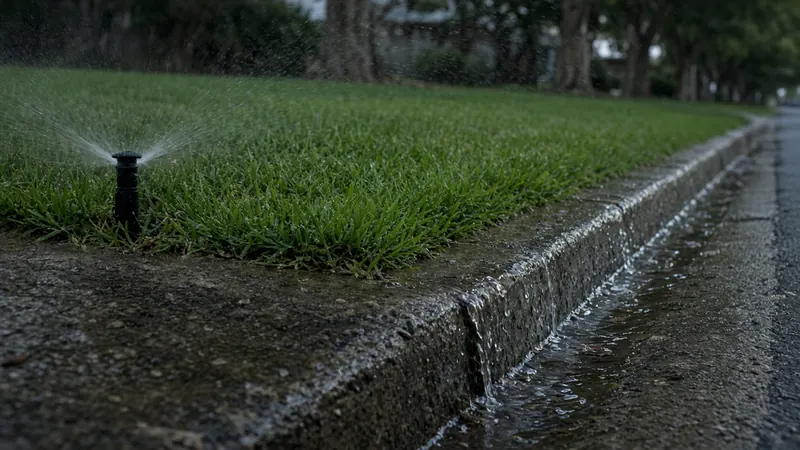
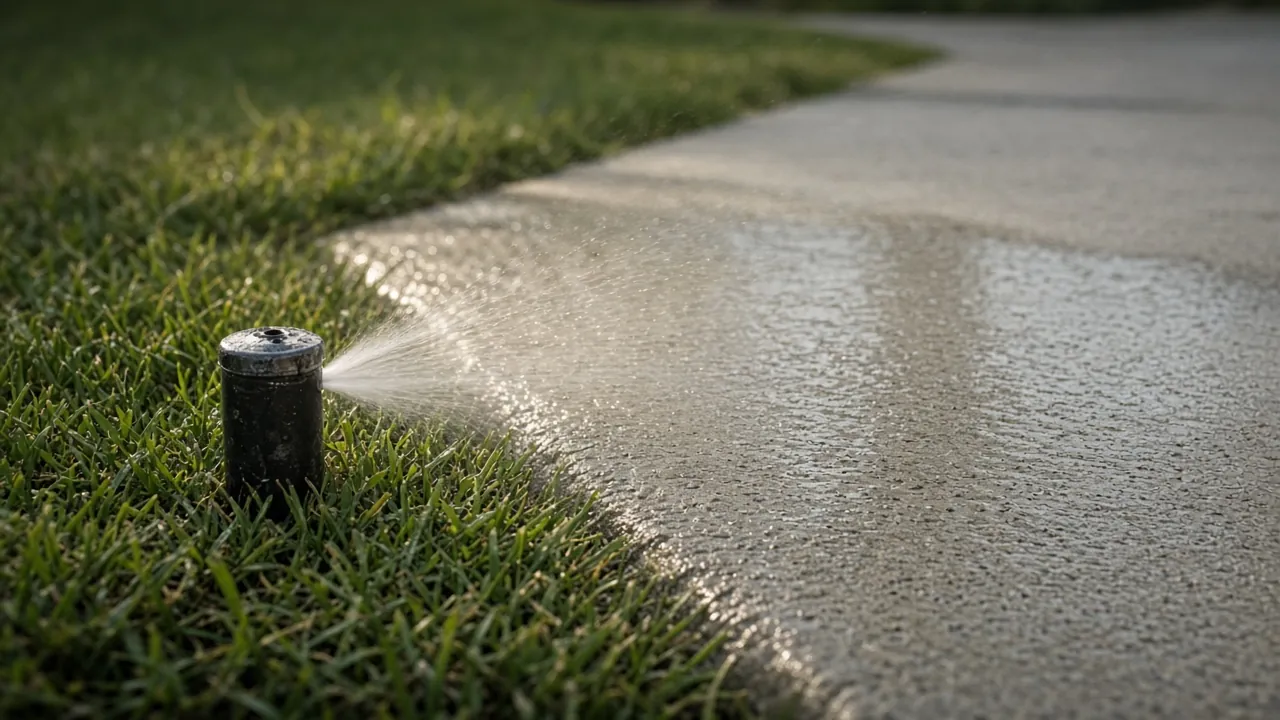
- Heads spraying the house, sidewalk, driveway or street
- Heads buried in grass, spraying into the turf instead of over it
- Dry gaps between heads where the spray does not reach
- Misting or fogging, a sign the pressure is too high for that head
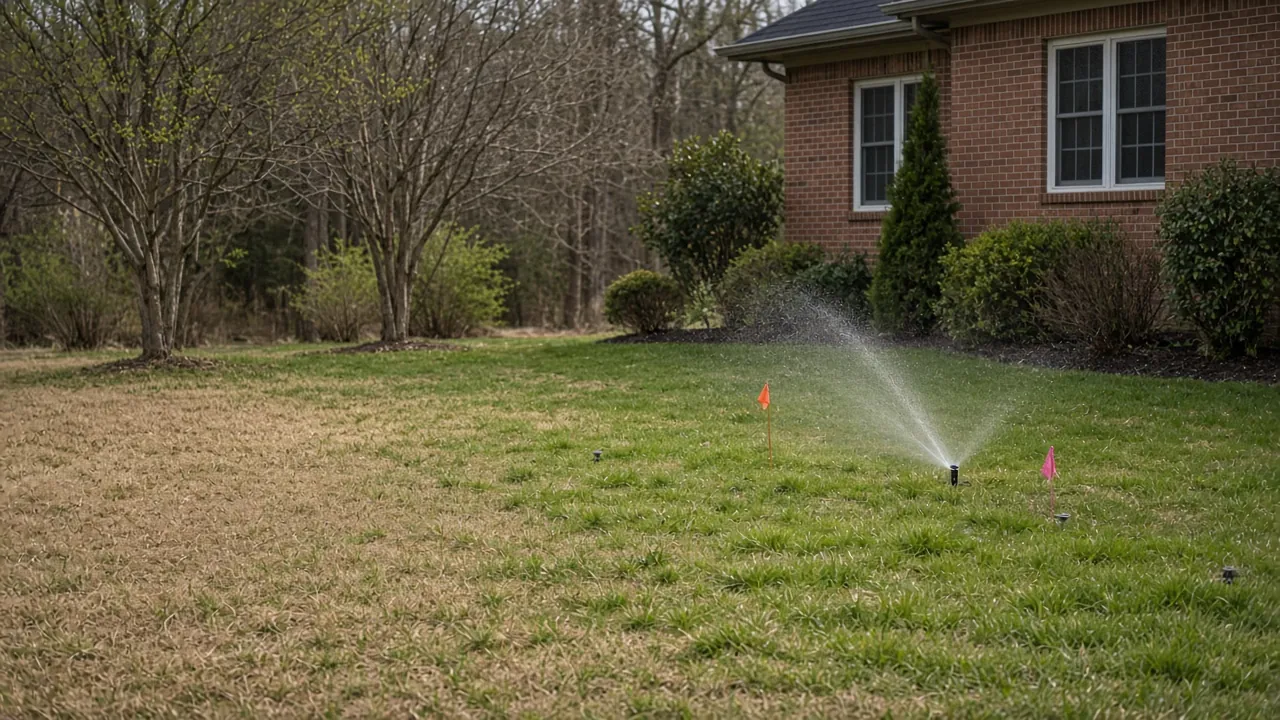
Put a flag or a golf tee next to every problem head. By the end of the walk you have a map of what needs fixing.

4. Check the valve boxes
Pop the lids on the valve boxes. A little water after rain is normal in clay. A box that is full when it has not rained, or that fills while a zone runs, points to a leaking valve or fitting. While you are there, make sure the valve wires are not sitting loose in the mud. Corroded splices are a common reason a zone stops working.
If you cannot find a valve box at all, it may be buried under grass or a bed. That is common in older University Park and Highland Park yards.
5. Read the water meter
With all water in the house off and the sprinkler system off but pressurized, look at the meter. Most residential meters have a small leak indicator, a triangle or a tiny dial, that spins when any water is flowing. If it moves, you have a leak somewhere. Close the irrigation shut-off and look again. If it stops, the leak is on the sprinkler side. Our guide to finding a sprinkler leak takes it from there.
6. Clean what is clogged
Weak or ragged spray from one head usually means a clogged nozzle or the small filter screen under it. Unscrew the nozzle, rinse the screen, and put it back. If the whole zone is weak, the problem is upstream: a valve not opening fully, a leak, or a crushed line.
Drip zones need a look too. Open the filter at the start of the zone and rinse it, then run the zone and check that emitters are wet. Mulch and roots bury drip line over the winter, and a shovel during spring planting is the most common way it gets cut.
7. Fix the small stuff
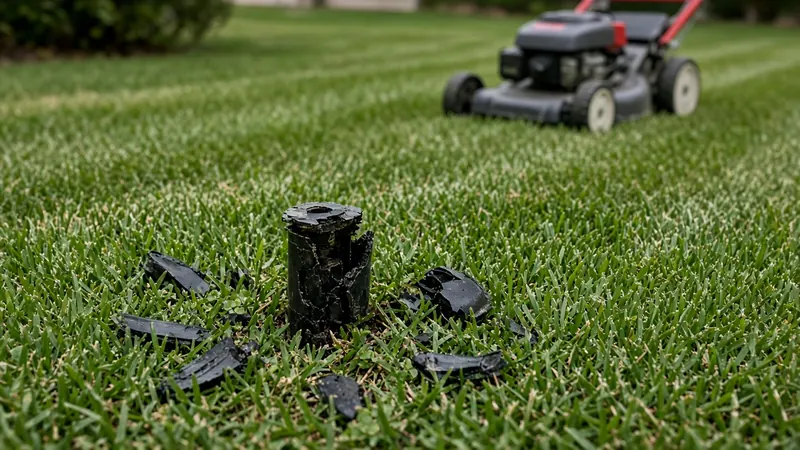
Most spring problems are small: a cracked head, a nozzle that needs replacing, a head that sank and needs to be raised to grade. Mower damage piles up over a season, and we explain the patterns in why mowers break sprinkler heads.
If you are swapping heads yourself, match the brand, the pop-up height and the nozzle to the other heads on that zone. Mixing nozzles on one zone gives you wet and dry patches no schedule can fix.
8. Set a spring schedule, not a summer one
Spring rain in North Texas often covers most of what an established lawn needs. Do not start with your July run times. Start low, and let the rain sensor do its job. One approach:
- Use cycle and soak on lawn zones from day one. See how to water clay soil.
- Water only when the top inch or so of soil is dry.
- Sign up for WaterMyYard and follow its weekly number. In spring it frequently says to skip.
- Raise run times gradually as May and June heat arrives.
9. Test the rain and freeze sensor
Most wired rain sensors have a test button or a spindle you can press to simulate rain. With a zone running, trip the sensor and see if the zone stops. If it does not, the sensor is bad, disconnected, or bypassed at the controller. Dallas requires rain and freeze sensors on automatic systems. More in rain and freeze sensors.
10. Write it down
Tape a card inside the controller door with the zone list, what each zone waters, and the run times. The next person who touches the controller, including you in six months, will thank you.
When to call someone
You can handle flags, nozzles and the schedule. Call for help when you find:
- A zone that will not turn on at all, or will not shut off
- A wet spot that stays wet
- A cracked backflow device
- Several broken heads on one zone, which often means a pressure or layout problem
- A controller that will not power on
Those are the jobs we handle on a full system repair visit. We do the same walk described above, fix what we find, and set the controller for spring before we leave.
Sources
- City of Dallas, Water Conservation Ordinance summary
- City of Dallas Water Conservation, Irrigation System Checkup guide (PDF)
- Texas A&M AgriLife, WaterMyYard
Have a question this did not answer? Call 469-902-9800 and ask. More articles on the blog.