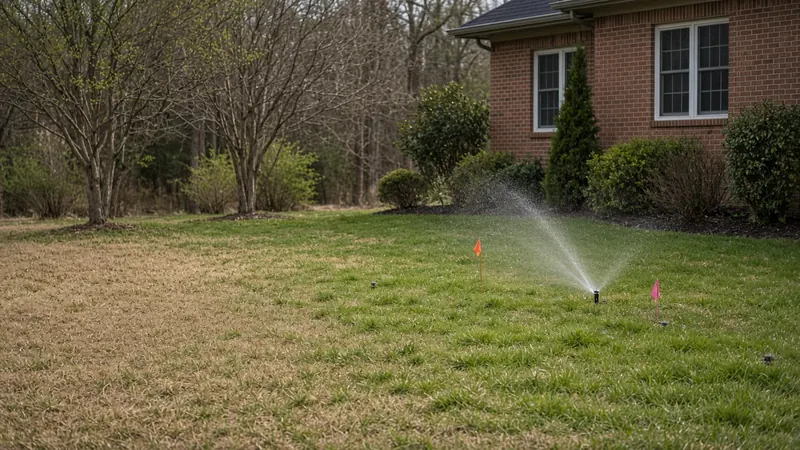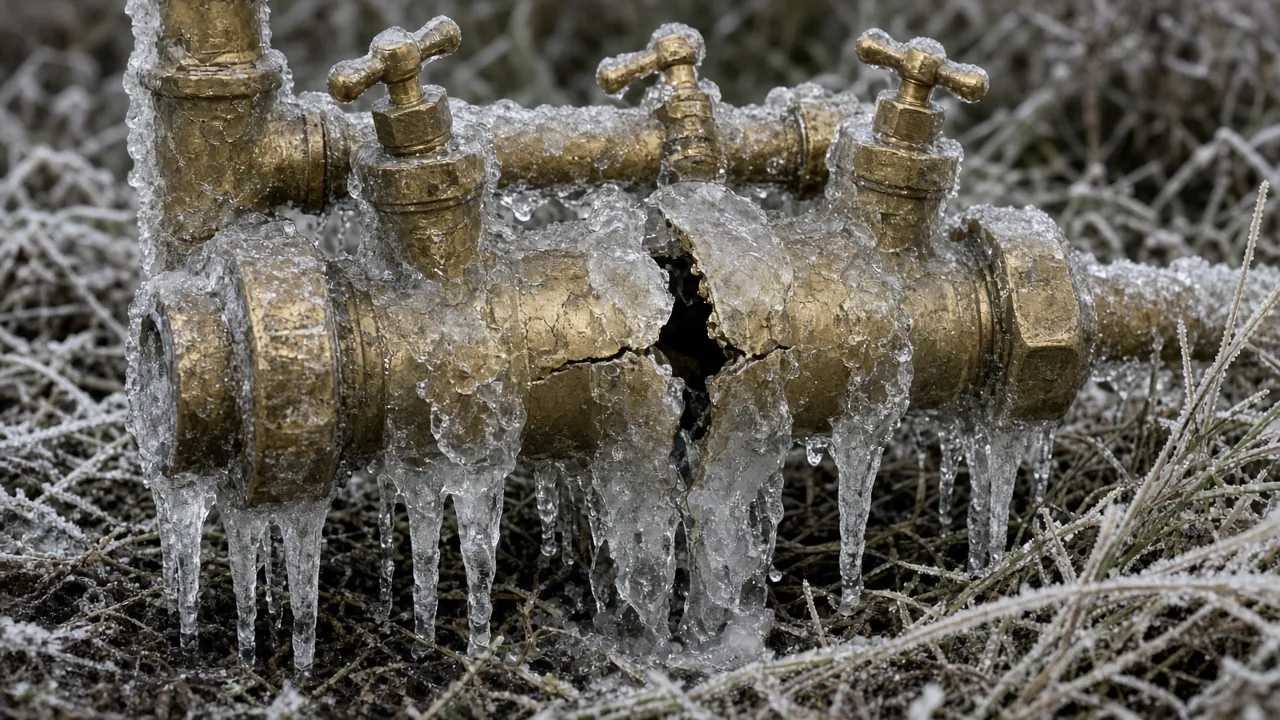
Most winters in Dallas, a sprinkler system will be fine if you do nothing. Then a cold front comes through with a few nights in the teens, and the calls start the morning after it warms up: water spraying from a brass fitting by the front porch, a sheet of ice on the sidewalk, a valve box overflowing.
The reason freeze damage hits so hard here is that we do not prepare for it. Northern cities drain and blow out their systems every fall. In North Texas, most people leave the system on all year. That is usually fine. You just need to know what to do when a real freeze is in the forecast.
What freezes first
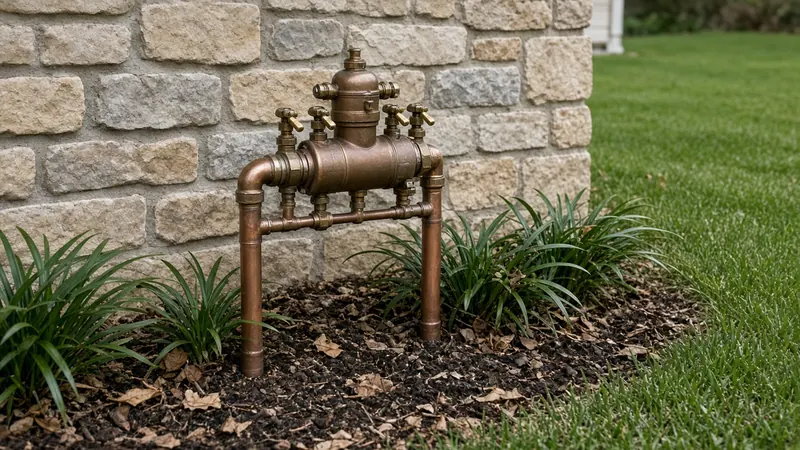
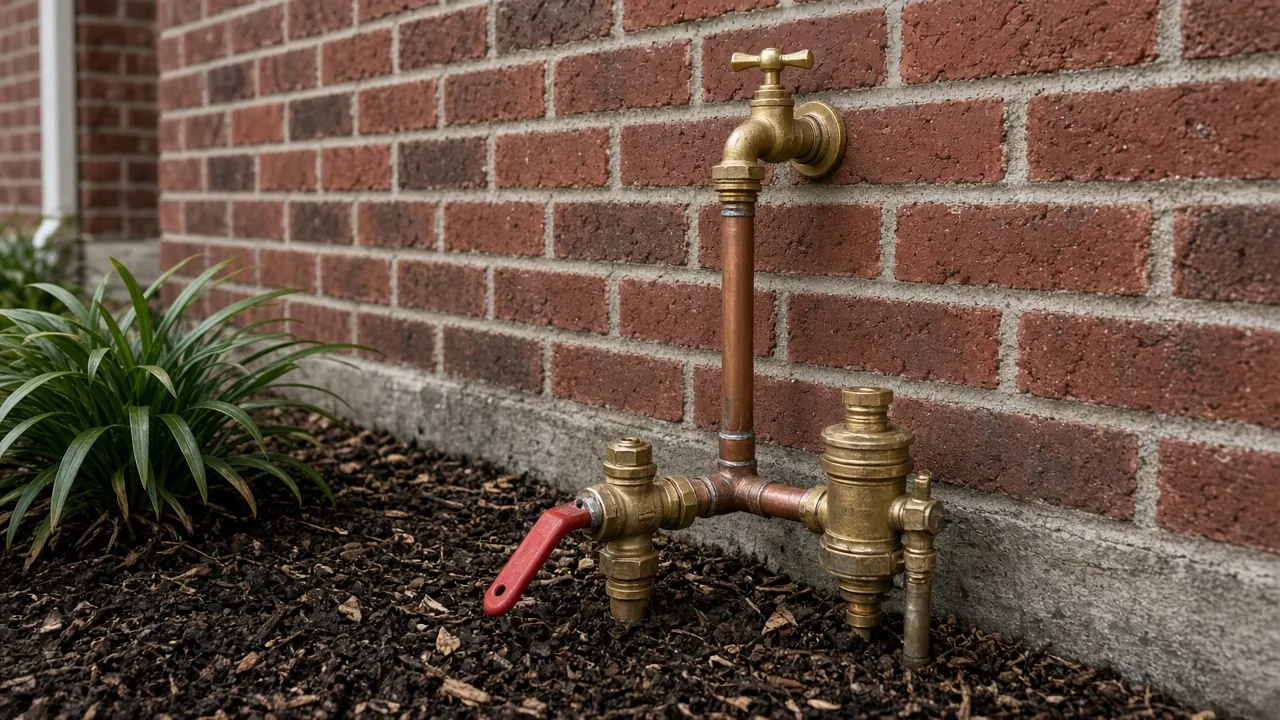
The backflow preventer. On most Park Cities homes, it is the brass assembly that sticks up out of the ground near the house or near the water meter, usually close to a front hose bib. It is above ground, it is full of water, and it has thin brass and bronze parts. When the water inside freezes and expands, something gives: a cracked body, a split bonnet, a popped test cock.
The exposed pipe going in and out of it. The short copper or PVC risers between the ground and the backflow device are just as exposed.
Shallow lines and valves. Buried pipe is usually safe in an ordinary freeze, because the ground does not freeze deep here. A long, hard freeze can still get to shallow lines, valves set high in their boxes, and drip lines on the surface.
Above-ground drip and pot lines. Thin drip tubing on top of the mulch can split.
Before a hard freeze: four steps
When the forecast shows temperatures well below freezing for more than a few hours, take these four steps. If you have never done this, do it once on a mild day so you know where everything is.
1. Turn off the controller
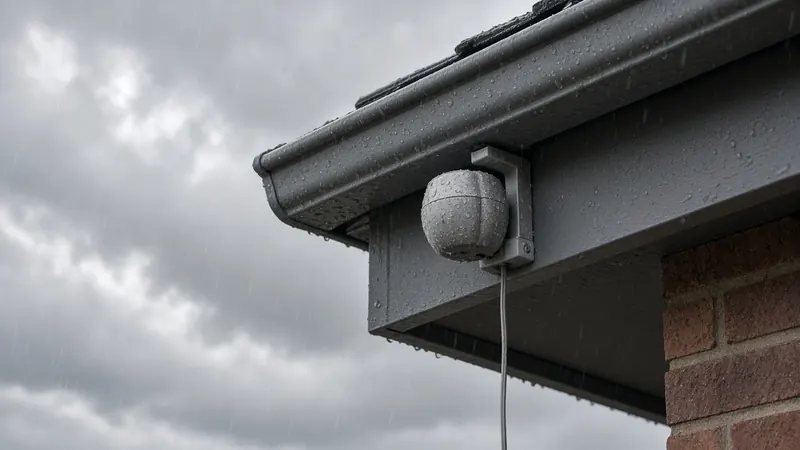
Set it to Off or Rain. Do not leave it running on the chance the freeze sensor will catch it. Sensors fail, and running sprinklers at night in freezing weather puts ice on walks and streets. Dallas requires freeze sensors on automatic systems, and University Park requires one too, but a sensor is a backup, not the plan.
2. Close the irrigation shut-off
Every system should have a shut-off valve between the water meter and the backflow device. Texas rules require an isolation valve there on new systems, according to 30 TAC §344.62. On older Park Cities homes, it may be a ball valve with a lever handle, a gate valve with a round wheel, or a valve in a box near the meter. If you cannot find it, that is worth fixing before winter.
Closing it isolates the sprinkler system. Your house water stays on.
3. Drain the backflow device
With the shut-off closed, open the small test cocks on the backflow device with a flat screwdriver, a quarter turn. A little water will come out. Then set the two larger valve handles on the device to a half-open position, at about a 45-degree angle. That keeps water from being trapped in the valve bodies.
This sounds fussier than it is. We will show you once on any visit if you ask.
4. Insulate it
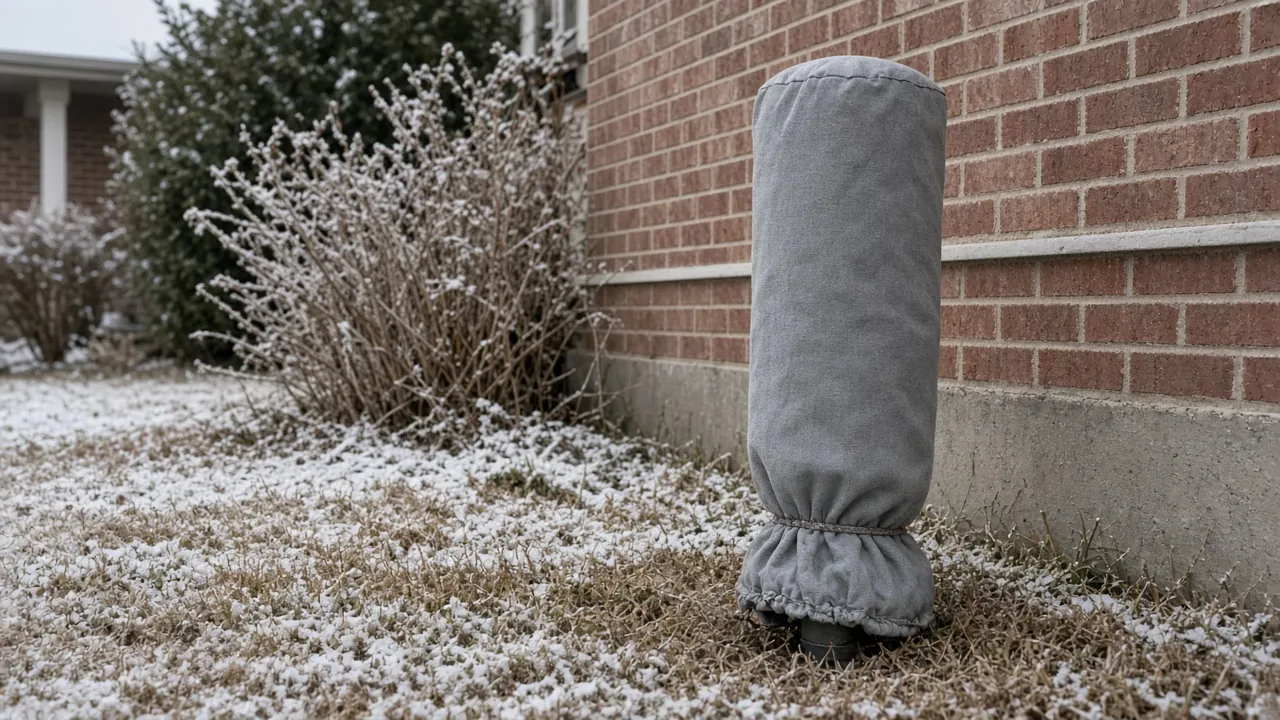
Put an insulated cover over the device. A fitted insulated pouch made for backflow preventers is best. In a pinch, wrap it in towels and cover that with a plastic bag to keep it dry. Wet insulation does very little. Many homeowners leave the cover on from December through February.
What not to do
- Do not drip a hose bib to protect the backflow device. The irrigation line is separate. Dripping a faucet does not move water through the sprinkler system.
- Do not pour hot water on a frozen backflow device. Let it thaw on its own.
- Do not turn the system back on during the freeze to “keep water moving.” That only makes ice.
- Do not wrap it in a way that blocks the test cocks permanently. You or your tester need to reach them.
After the freeze
Wait until it is above freezing and the device has had time to thaw. Then:
- Close the test cocks and set the two valve handles back to fully open, in line with the pipe.
- Open the irrigation shut-off slowly. Stand back and watch the backflow device for the first minute.
- If water sprays from the body, the bonnet or a test cock, close the shut-off again. The device is cracked or a seal has failed. The house is fine. Call us, or see our backflow testing and repair page.
- If it holds, run each zone from the controller and walk the yard. Look for new wet spots, a zone with weak spray, or water bubbling from a valve box.
- Put the controller back on its schedule and check that the date and time survived any power outage.
A cracked backflow device often needs to be replaced, not repaired. Under Texas rules, a backflow assembly has to be tested by a licensed tester after it is installed, repaired or replaced. We explain that in backflow testing requirements in Texas.
Should you winterize every year?
A full northern-style winterization, where the whole system is drained and blown out with compressed air, is rarely needed in Dallas. What helps most is simpler:
- Know where the shut-off is and make sure it works. Old gate valves often seize. If yours does not turn, have it replaced before you need it.
- Keep an insulated cover on the backflow device through winter.
- Make sure the freeze sensor works. You can test most by unplugging the sensor or using the controller’s sensor test.
- Water less in winter anyway. Warm-season lawns like St. Augustine and Bermuda are mostly dormant. They need little water from December through February, and a weekly WaterMyYard recommendation will often tell you to skip.
If you want it handled for you, our winterization and freeze protection service covers the cover, the shut-off and a check of the sensor, and we come back in spring for start-up. See the spring start-up checklist for what that involves.
Signs the freeze did damage you have not seen yet
Some freeze damage does not show up until spring, when the system runs for the first time in weeks:
- A zone that will not shut off, because a valve diaphragm or bonnet cracked
- Water in a valve box that will not drain
- A wet spot near the house where a shallow line split
- A drip zone with half its emitters dead
If any of that shows up, it is not a mystery. It is usually one cracked part, and it is a normal repair.
Sources
- 30 Texas Administrative Code §344.62, Minimum Design and Installation Requirements and §344.50, Backflow Prevention Methods
- City of Dallas, Water Conservation Ordinance summary
- City of University Park, Watering Restrictions
Have a question this did not answer? Call 469-902-9800 and ask. More articles on the blog.