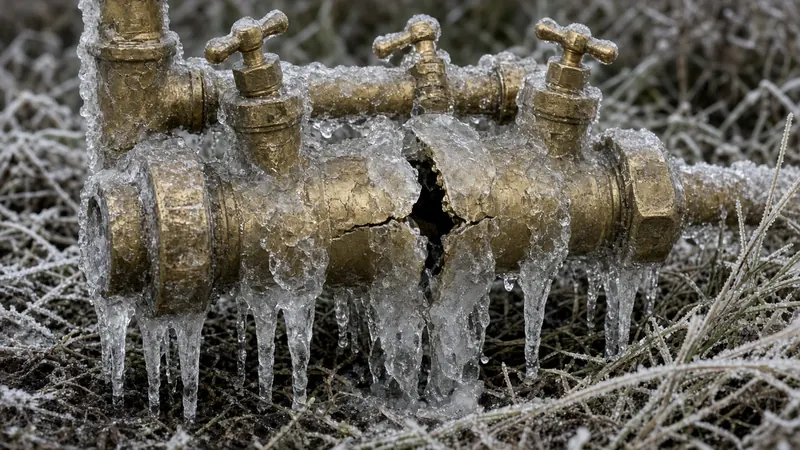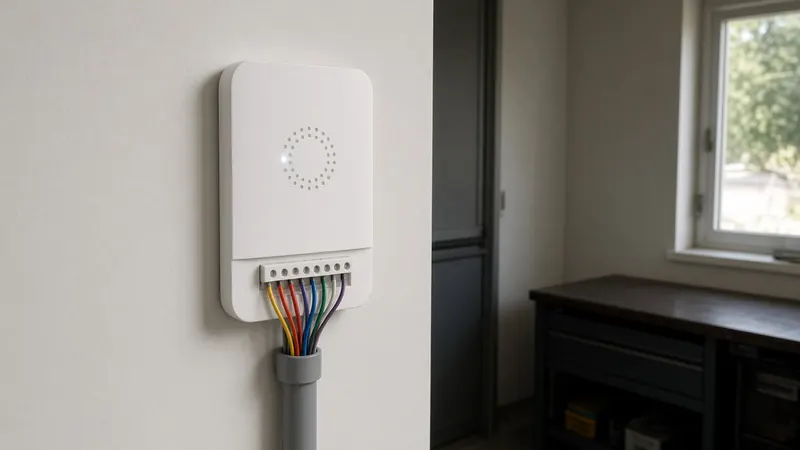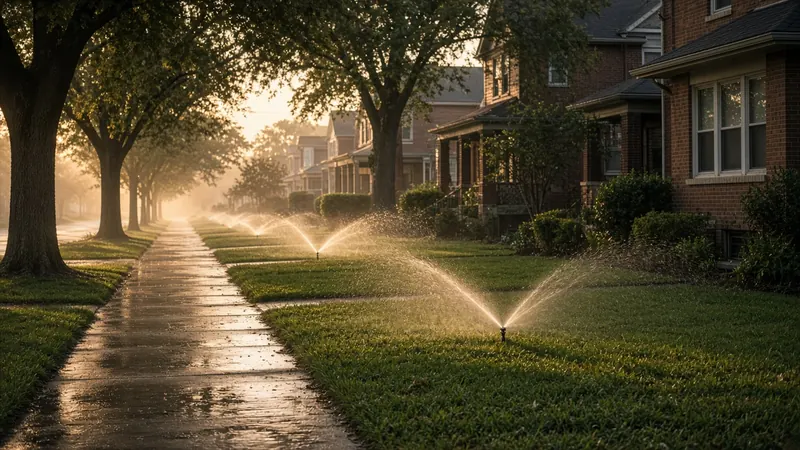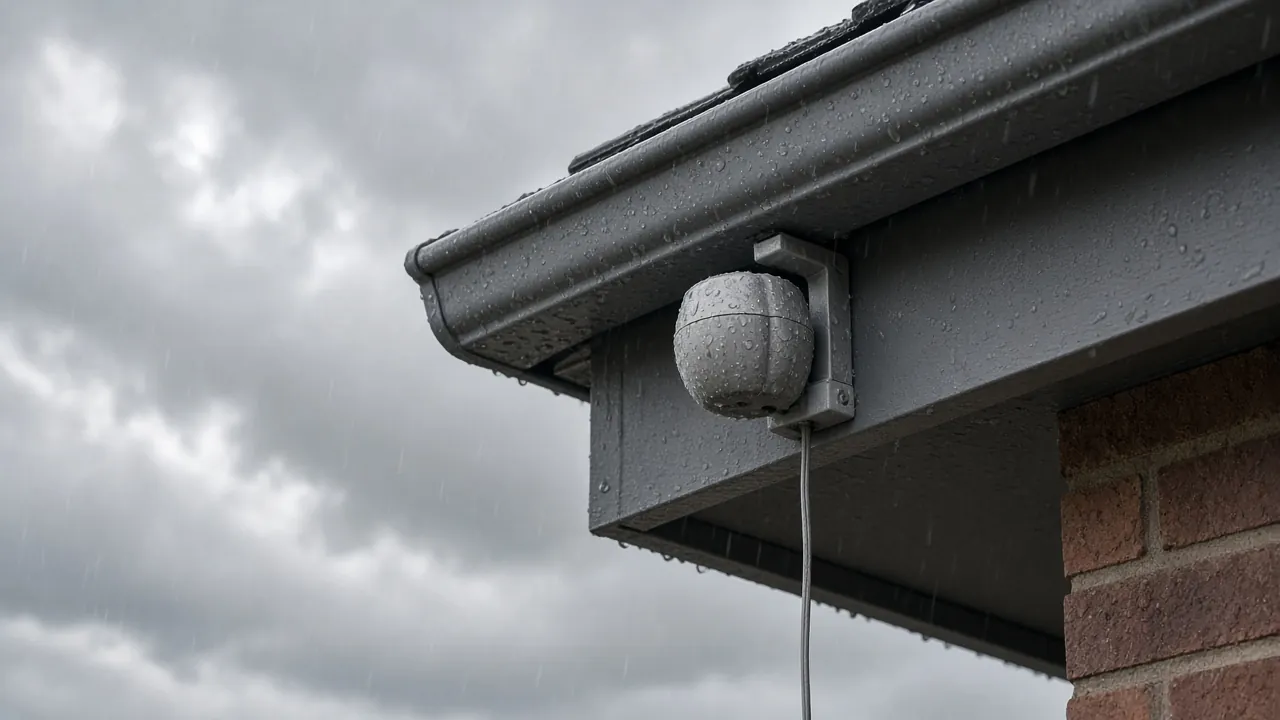
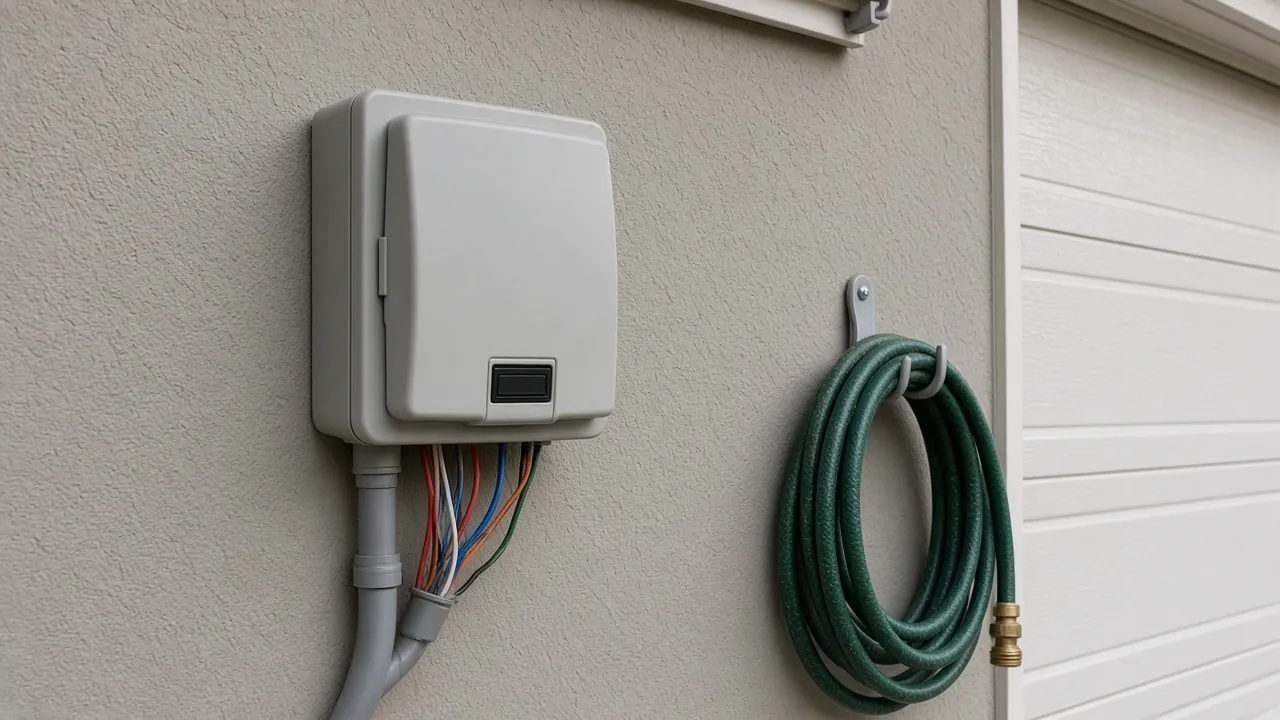
Most people have seen a neighbor’s sprinklers running in a downpour. In a hard freeze, the same system can coat the sidewalk and street in ice. Both are what rain and freeze sensors are for. They are small devices, usually mounted on a gutter or fascia, wired to the controller, and they stop the system when conditions say it should not run.
This article explains how they work, what the rules in Dallas, University Park and Texas say, and how to tell if yours is doing its job.
How a rain sensor works
The most common type has a stack of discs that swell when they get wet. After enough rain, the swelling discs press a switch that interrupts the controller’s signal to the valves. The system stays off until the discs dry out. Most have an adjustment for how much rain it takes to trip them.
Other types use a small cup that collects water, or a wireless sensor that talks to the controller. Weather-based “smart” controllers can also skip watering based on rainfall data, which we cover in smart controllers and the Dallas rebate.
How a freeze sensor works
A freeze sensor is a temperature switch. When the air temperature drops below its set point, it stops the system. Many rain sensors include a freeze switch in the same unit.
What the rules say
Dallas. The City of Dallas says automatic sprinkler system owners are required to have rain and freeze sensors installed, and also lists not watering during any form of precipitation among its rules, in its water conservation ordinance summary. That covers Preston Hollow, Bluffview, Devonshire, Greenway Parks and the M Streets.
Texas. State design rules in 30 TAC §344.62 require all new automatically controlled irrigation systems to include sensors or other technology that stops the system during rain or when the soil is moist. Repairs that replace an existing controller must also add one. Those rules took effect January 1, 2009.
University Park. The city’s irrigation code, Article 3.11, requires new automatic systems to include sensors or technology that interrupt the system during moisture, freeze or rainfall, and a controller replacement must include rain or moisture shut-off. It also makes it an offense to operate a sprinkler system when the outside air temperature is at or below freezing, or to let spray or runoff freeze onto a street, alley or sidewalk.
Highland Park. Check the town’s water conservation page for current requirements.
In short: if you have an automatic system in our area, you should have a rain sensor, and you almost certainly want a freeze sensor.
Why the freeze sensor matters here
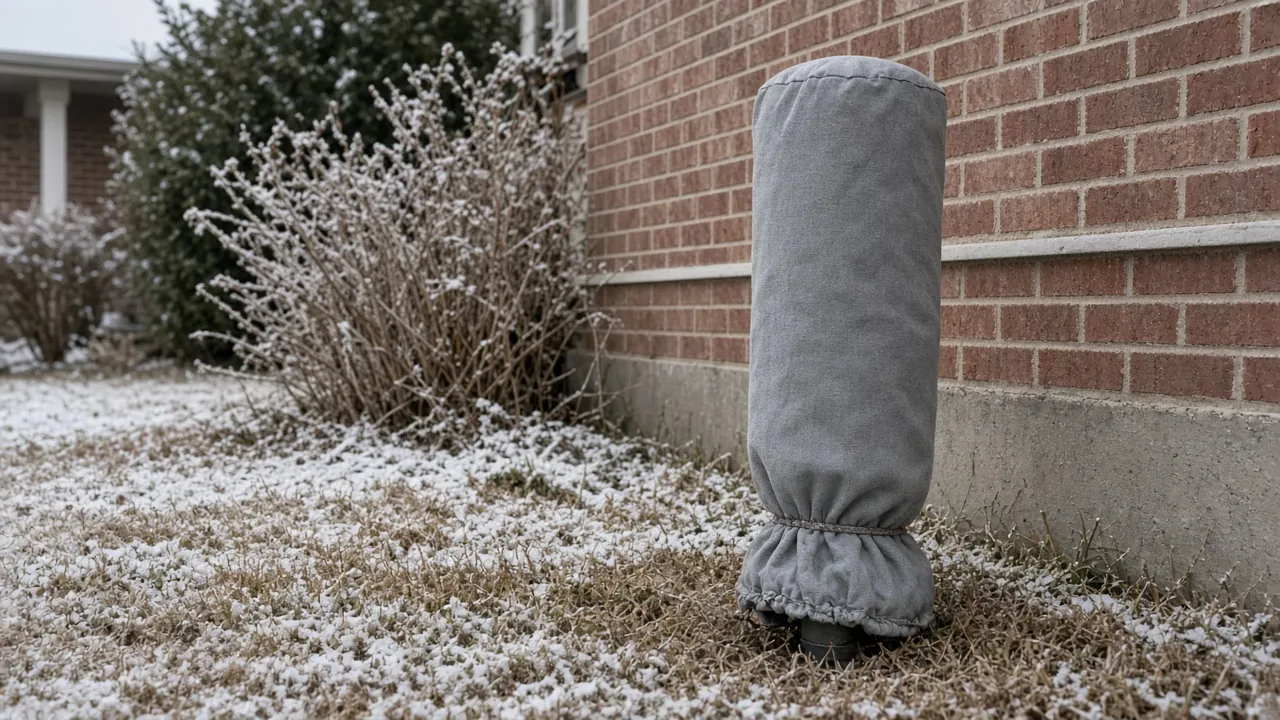
North Texas freezes are short but real. Water sprayed onto a walk or a street at 30 degrees becomes a sheet of ice. A sprinkler running in a freeze also puts water into lines and backflow devices that may already be at risk. Our freeze prep guide covers what to do before a hard freeze, and the freeze sensor is your backup for the nights you forget.
Sensors and smart controllers
A weather-based controller pulls rainfall and temperature data from the internet or an on-site weather station and can skip watering after rain. That does not always replace a physical sensor. Online weather data comes from a station that may be miles away, and a storm can soak one neighborhood and miss the next. A wired rain sensor on your own gutter reacts to what actually fell on your lot. Many smart controllers accept both, and using both is a good setup. If your controller loses its Wi-Fi connection, the physical sensor is still there.
Whatever you use, check that it meets the rules that apply to your address. Dallas specifically mentions rain and freeze sensors on automatic systems, so a freeze shut-off of some kind should be part of the setup.
Is your sensor working?
Sensors fail quietly. The controller looks fine, and the system runs in the rain. Common problems:
- Bypass switch left on. Most controllers have a switch or a setting to ignore the sensor. Someone turned it on during a repair and never turned it back.
- Wire cut. Gutter work, roofing, painting and tree trimming cut sensor wires. Some controllers treat a cut wire as “dry,” so the system keeps running.
- Discs worn out. After years in the sun, the discs stop swelling properly.
- Wrong location. A sensor under a tree, an eave or a roof overhang does not get rained on.
- Battery dead on a wireless sensor.
- Never connected. We find sensors on the gutter that are not wired to anything.
How to test a rain sensor
- Start a zone manually from the controller.
- For a disc-type sensor, press the test button or plunger on top, if it has one. Otherwise, pour water into or spray it until the discs are soaked. It may take a few minutes.
- The zone should shut off. Many controllers also show a “sensor active” or rain icon.
- If it does not, check that the controller’s sensor setting is set to active, not bypassed, and look at the wire.
To test a freeze switch, follow the manufacturer’s instructions; some have a test function, and some can only be checked on a cold day.
Where to mount one
- In the open, where rain falls on it directly, not under trees or eaves.
- Where sprinklers will not hit it. A sensor that gets watered by the system shuts the system off.
- High enough to be out of reach, usually on a gutter or fascia.
- Close enough to the controller that the wire run is reasonable, or use a wireless sensor.
Adjusting the setting
Rain sensors usually let you set how much rain it takes to trip them. On clay soil, a light shower does not put much water into the root zone, so a setting that trips on a trace of rain can skip watering that was needed. A setting that waits for a meaningful amount of rain works better. After the sensor dries, check the soil before assuming the lawn needs a full cycle. Our watering guide covers how to check.
When to replace
Replace the sensor if it does not trip during a test, if the discs are cracked, or if the housing is broken. If you are replacing the controller, the state rule means you will be adding a sensor anyway. We install and repair them as part of controller repair.
If you are not sure your sensor works, or you do not have one, contact us.
Sources
- City of Dallas, Water Conservation Ordinance summary
- 30 Texas Administrative Code §344.62, Minimum Design and Installation Requirements
- City of University Park, Code of Ordinances, Article 3.11, Irrigation Systems
- Town of Highland Park, Water Conservation
Have a question this did not answer? Call 469-902-9800 and ask. More articles on the blog.