If you replace the same sprinkler head twice in one summer, it is time to stop replacing it and figure out why it keeps breaking. On Park Cities lots, the answer is usually one of four things: the mower, the edger, a tire, or a trash bin. Each leaves a slightly different kind of damage, and each has its own fix.
Read the damage
Pull the broken head and look at it.
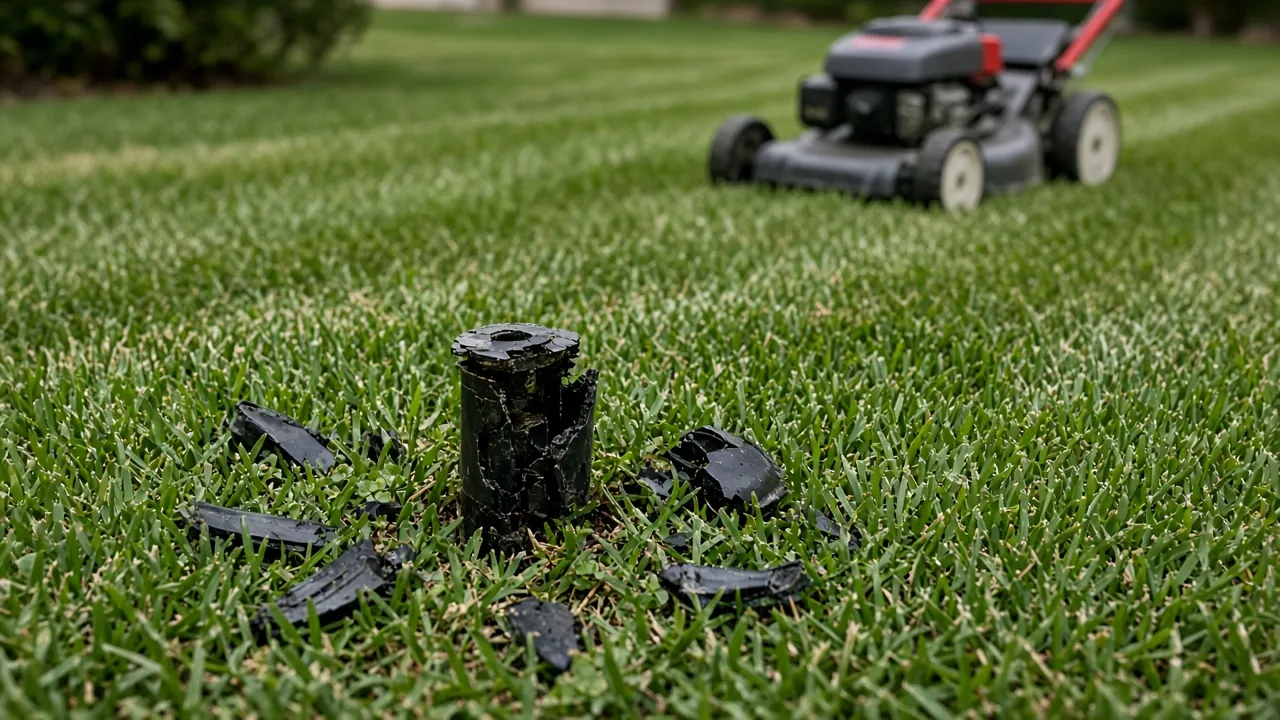
Top sheared off, or the cap chewed and scuffed. Mower. The head was sitting a little above the soil or did not drop all the way after the cycle. A mower blade or deck caught it.
Nozzle and riser stem cut cleanly, with string-trimmer marks on the body. Edger or string trimmer. Common along beds, walks and driveways.
Head body cracked, or the head pushed down and tilted. Weight. A car tire, a delivery truck, a pallet or a contractor’s trailer rolled over it. Parkway heads by the curb and heads by the driveway take most of this.
Head fine but the riser under it snapped. Also weight or a hard hit from the side. You see a geyser where the head used to be, because water is coming straight out of the broken fitting.
Head stuck down and not popping up. Not damage from above. Usually dirt in the head, a worn seal, or low pressure on the zone.
The mower problem
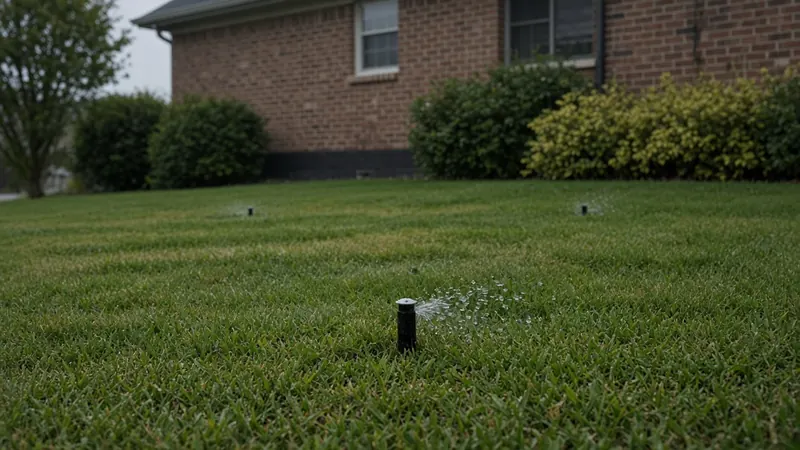
Heads are supposed to sit flush with the soil, so the cap is level with the ground under the grass. Over the years, a few things push them out of position:
- Clay soil swells and shrinks with wet and dry seasons, and heads shift with it.
- Thatch and soil build up around heads in St. Augustine lawns, so a head that was once flush ends up buried.
- Someone raises a head to clear the grass and sets it too high.
- A head that does not fully retract stays up after the zone shuts off.
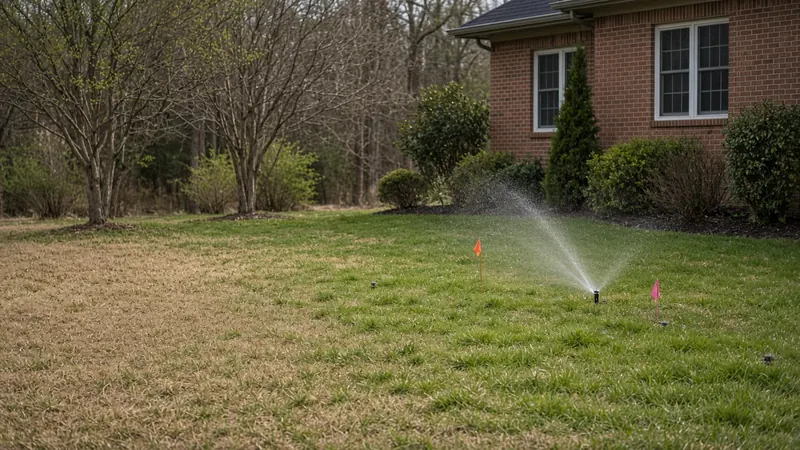
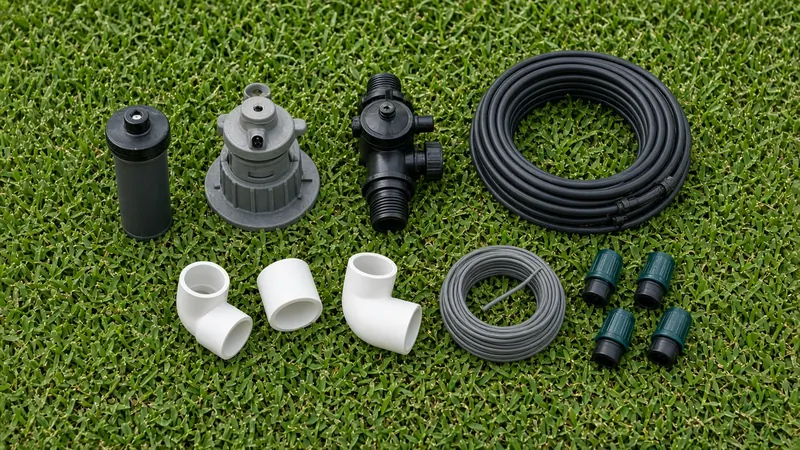
A buried head sprays into the grass and leaves a dry ring. A raised head gets hit by the mower. The fix for both is the same: set the head at the right height on a flexible riser, so it sits at grade and can give a little if something hits it.
Morning mowing is also a factor. If the mowing crew comes the morning after a watering day, a head that is slow to drop may still be up. Ask your crew to flag any heads that are standing.
The edger problem
Heads along a bed edge or a sidewalk are in the path of the string trimmer every week. Two fixes:
- Move the head back from the edge. Texas design rules for new systems say pop-up and rotor heads should not be installed closer than four inches from hardscape like a sidewalk or driveway, according to 30 TAC §344.62. Many older systems have heads right against the concrete.
- Put heads in the bed on drip instead. If a head is watering a bed edge and the lawn, converting the bed to drip often lets you remove the edge head entirely. See drip for flower beds.
The parkway problem
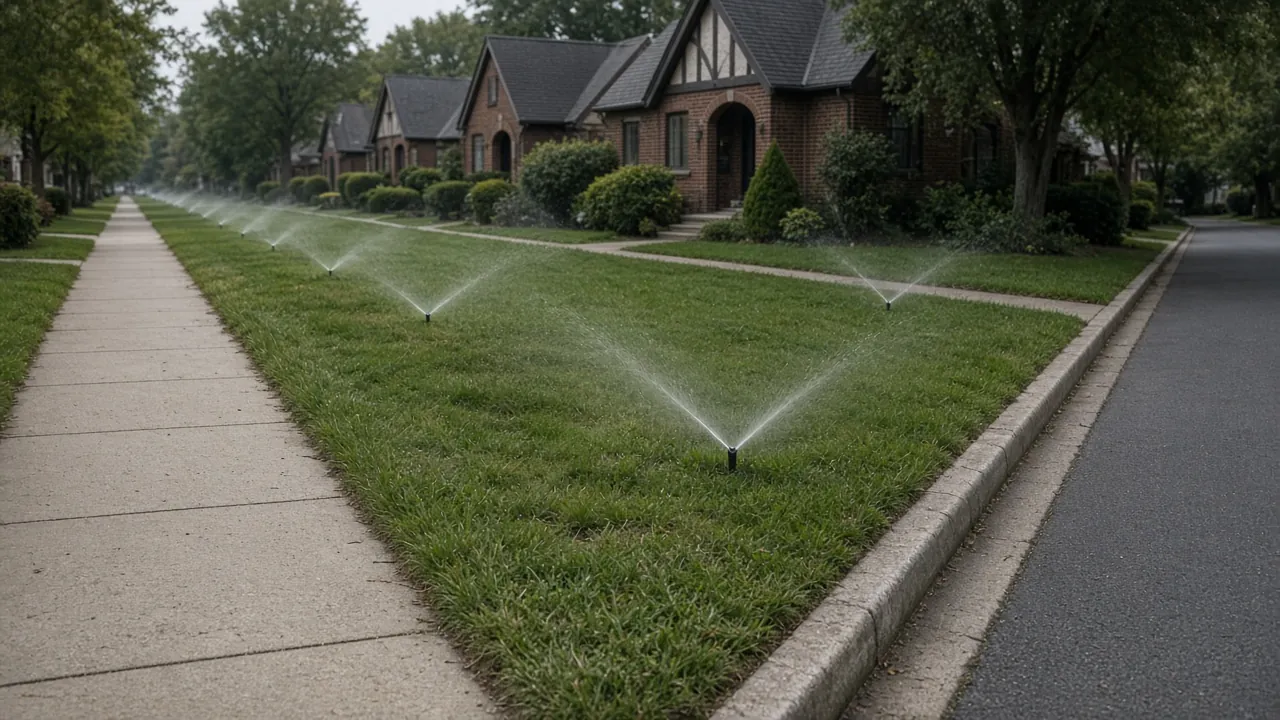
The strip of grass between the sidewalk and the street is the hardest place on the property for a sprinkler head. Cars park on it. Delivery trucks run over the edge. Trash bins get rolled across it. And because it is narrow, overspray hits the street and the sidewalk every cycle.
The same Texas rule has a specific line about this. New systems may not use above-ground spray heads in landscape areas less than 48 inches wide when pavement runs along two or more sides. Most parkways in University Park and the M Streets fit that description. Older systems were installed before that rule, so many parkways still have spray heads.
Options for a parkway that keeps breaking heads:
- Use sturdy heads with a strong spring and set them exactly at grade.
- Use narrow-strip nozzles that keep the water on the grass.
- Move heads in from the curb a few inches so tires are less likely to hit them.
- When the zone gets redone, consider subsurface drip line for the strip, which has nothing above ground to break.
The alley problem
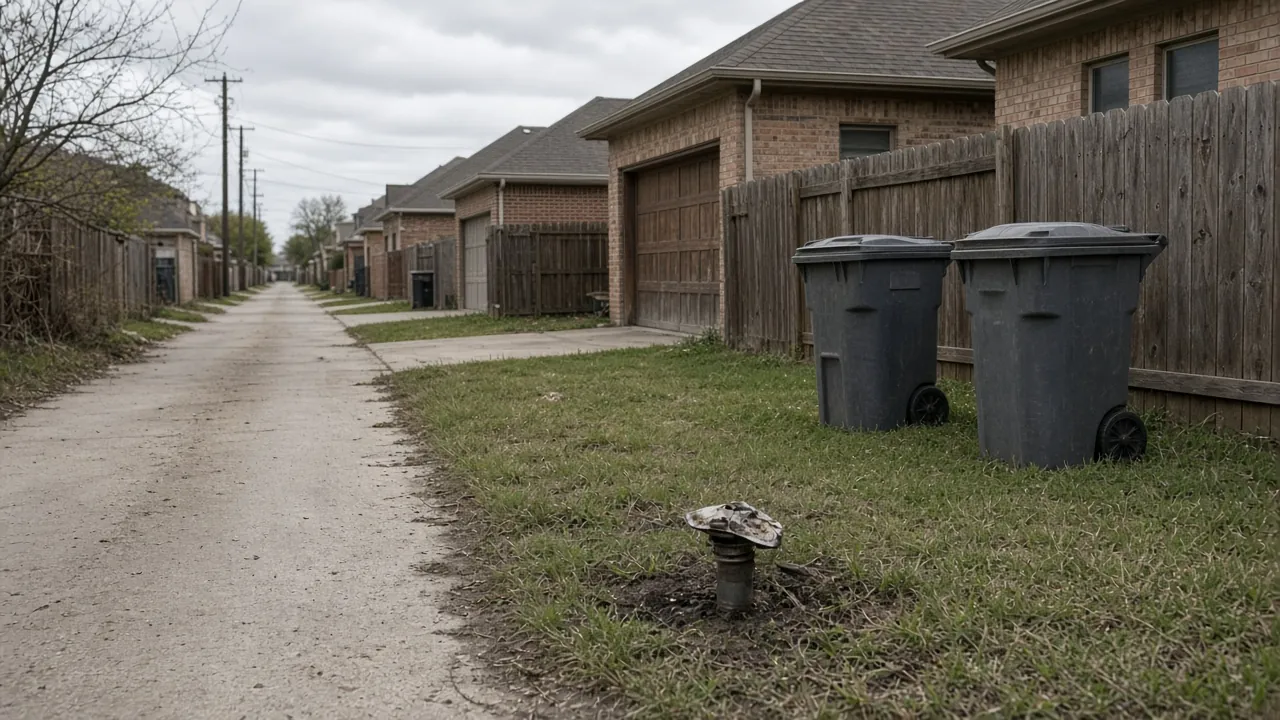
Many Park Cities homes have alley access, and alley-side heads and lines get crushed by trash trucks and service vehicles, or by bins dragged back and forth twice a week. If a head by the alley keeps breaking, it may simply be in the wrong place. Moving it a foot or two, or redoing the zone so that strip is covered from further in, can end the cycle.
Does it matter if I just replace the head?
A single head swap is a normal homeowner fix. A few tips if you do it yourself:
- Match the brand and model if you can, and match the pop-up height (2, 4, 6 or 12 inch).
- Match the nozzle to the other heads on that zone. Mixing spray nozzles with different flow rates on one zone gives you wet and dry patches.
- Flush the line before you put the new head on. Turn the zone on briefly with the head off so dirt clears out of the riser.
- Check that the head sits flush and straight.
If the new head does not fix it, or the riser is broken below ground, or three heads on the same zone are broken, it is time for a broken head repair visit. Several broken heads on one zone sometimes means something else is going on, like pressure high enough to stress parts. Our low pressure article covers pressure from the other direction.
What it costs to keep fixing the same head
One head is a small repair. The real cost of a head that breaks repeatedly is the water. A broken head or riser can throw a lot of water into the street for an entire cycle, twice a week, until someone notices, and in Dallas, water running into the street is a violation of the conservation ordinance. We talk more about what drives repair costs in what affects sprinkler repair cost.
A quick seasonal habit
Once a month in the growing season, run each zone for a minute and walk it. Look for heads that are tilted, buried, standing up or spraying the walk. It takes ten minutes and catches most problems before the mower does. Our spring start-up checklist is a good template.
Sources
- 30 Texas Administrative Code §344.62, Minimum Design and Installation Requirements
- City of Dallas, Water Conservation Ordinance summary
Have a question this did not answer? Call 469-902-9800 and ask. More articles on the blog.