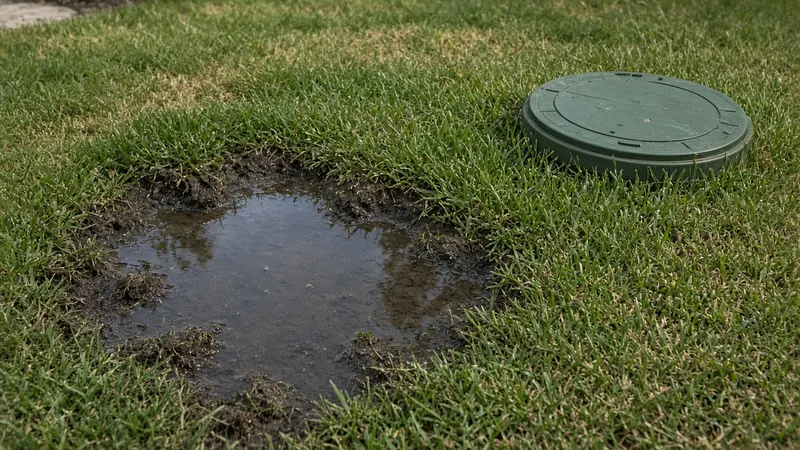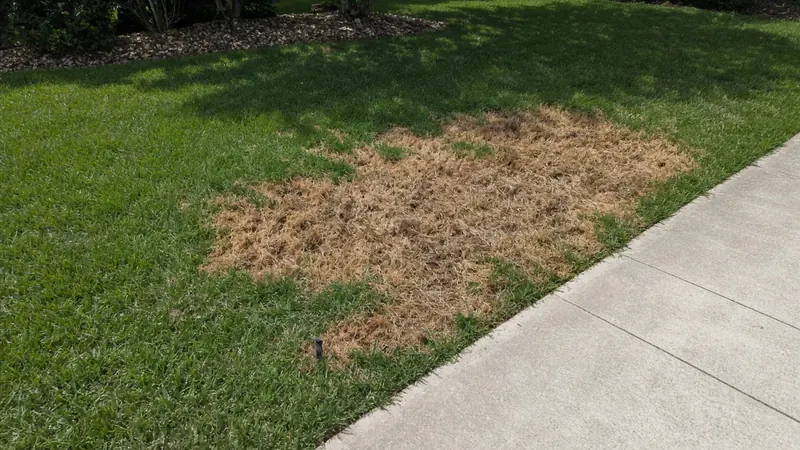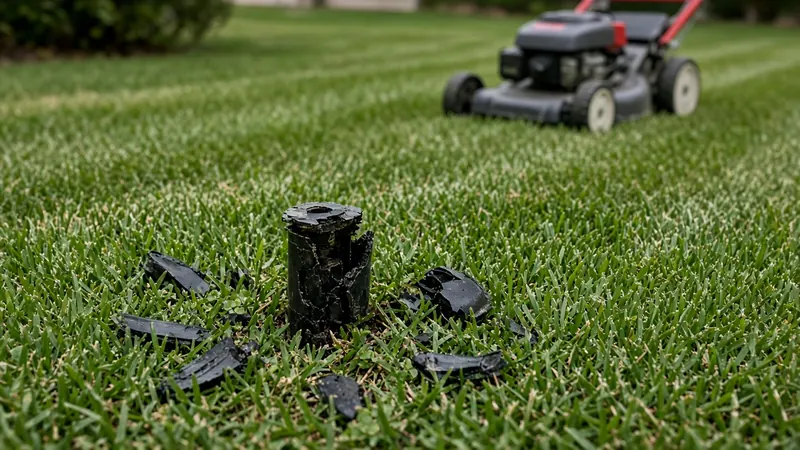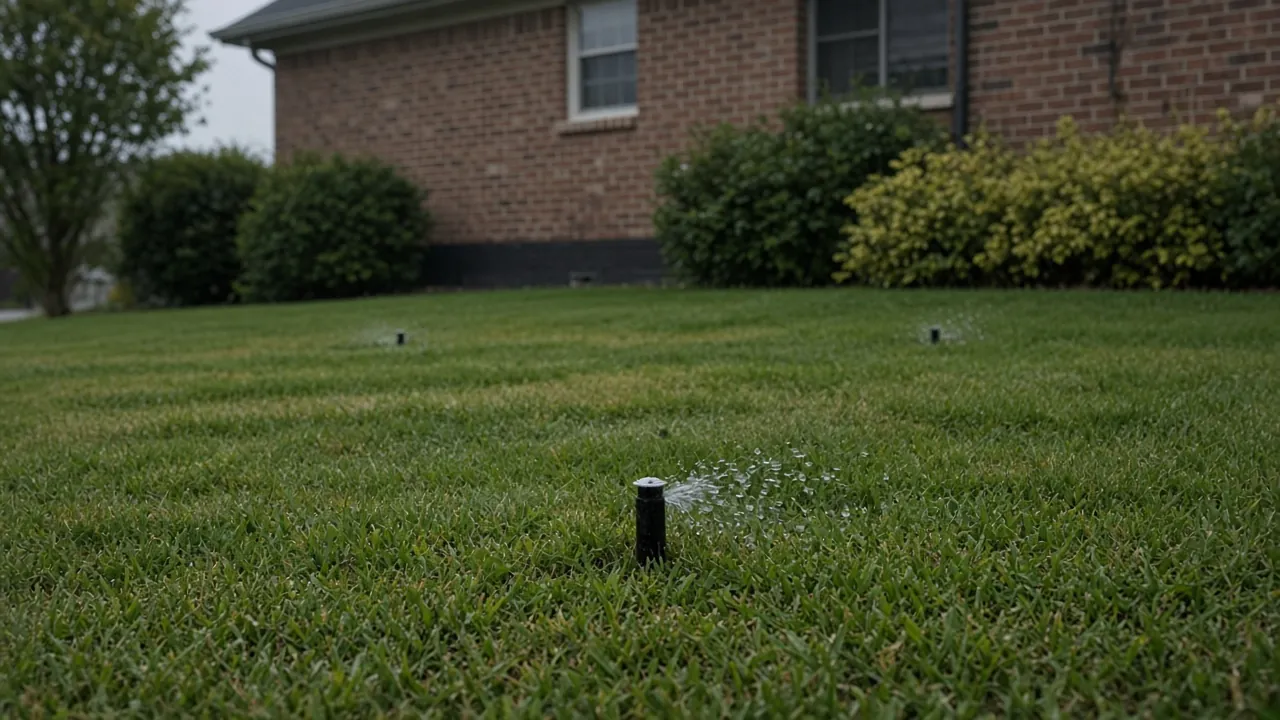
A zone with low pressure is easy to spot: heads that barely rise, sprays that fall short of the next head, rotors that turn slowly or not at all. Left alone, it shows up as brown strips and dry rings. See brown spots: sprinklers or not.
The good news is that low pressure has a short list of causes, and you can narrow it down with a few checks.
First question: one zone, or all zones?
Run each zone in turn from the controller.
Only one zone is weak. The problem is on that zone: a leak, a valve issue, too many heads, or clogs. Start below.
All zones are weak. The problem is upstream of the zone valves: the supply, the backflow device, a partly closed shut-off, or a mainline leak. Skip to the section on whole-system problems.
Pressure is fine at first, then drops partway through. Another zone, or a hose, may be running at the same time. Check the controller for overlapping programs.
One zone: a leak on the zone
A broken lateral line or a missing head lets water escape before it reaches the rest of the heads. The heads closest to the leak may work, and the ones beyond it sputter.
Walk the zone while it runs. Look for:
- A geyser where a head used to be.
- Bubbling or water rising out of the lawn.
- A soggy spot or a sunken area.
- A head that runs constantly at its base, which can mean a cracked fitting or riser.
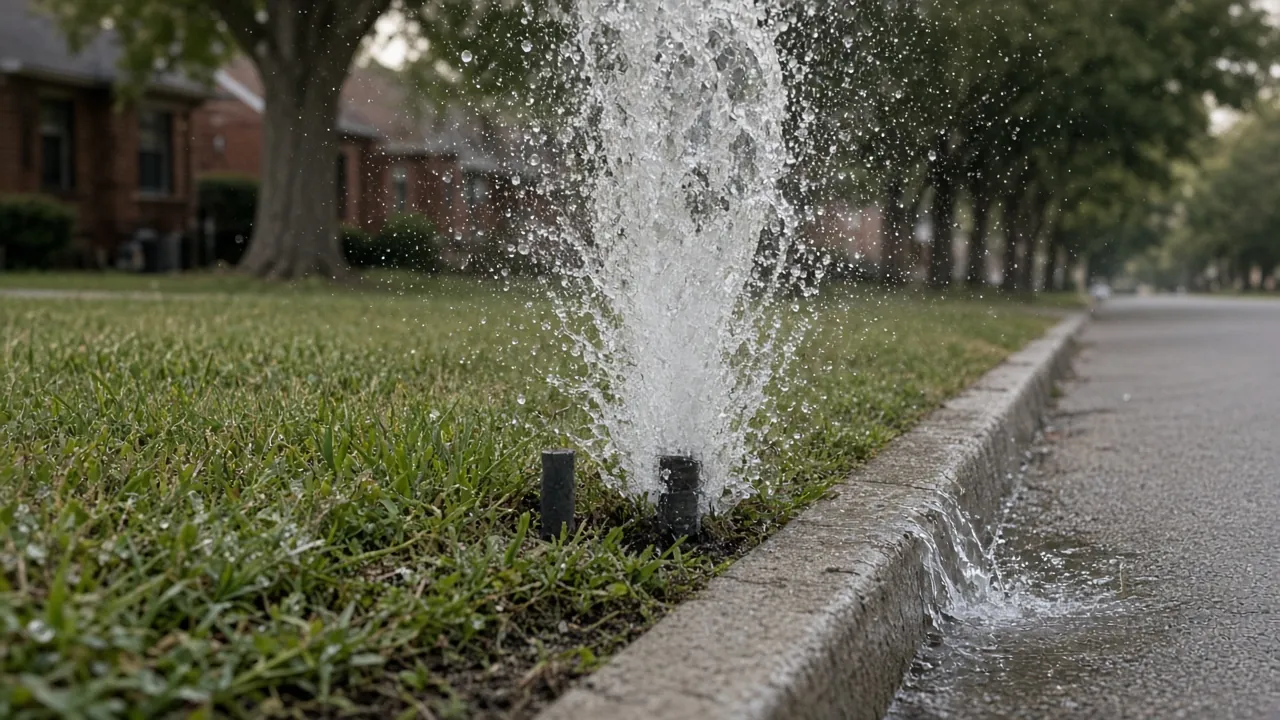
Our guide on how to find a sprinkler leak covers slow leaks that do not show on the surface.
One zone: the valve
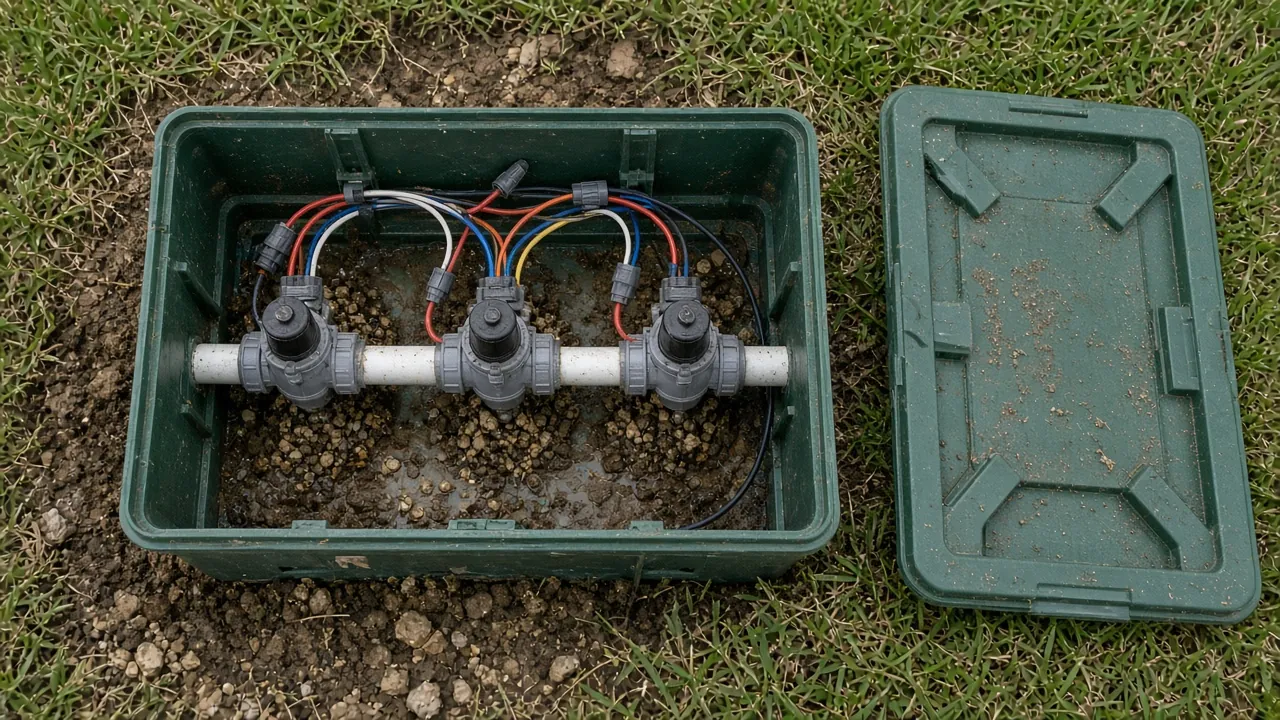
The zone valve controls how much water enters the zone. Common valve causes of low pressure:
- Flow control turned down. Many valves have a flow control handle on top. If someone turned it down, the zone is starved. Turning it back open, counterclockwise, often fixes it. Do not overdo it; some zones were throttled on purpose.
- Debris in the valve. Grit or a piece of pipe from a past repair can lodge in the valve and keep it from opening fully.
- A worn diaphragm that does not lift all the way.
Valve work is covered on our valve repair page.
One zone: too many heads
Older systems were sometimes extended by adding heads to an existing zone. Every zone has a limit to how much water it can supply. Past that point, pressure drops and every head gets less. If a zone was always marginal and someone added two heads to cover a new bed, that may be the problem.
The fix is to move some heads to a new zone, or convert part of the zone to lower-flow nozzles or drip. Texas design rules also say every head in a zone should apply water at the same rate, per 30 TAC §344.62, so mixing spray heads and rotors on one zone is a problem in itself.
One zone: clogged nozzles and screens
Each spray head has a small filter screen under the nozzle. Grit collects there, especially after a repair. If a few heads are weak and the rest are fine, unscrew the nozzles, rinse the screens and the nozzles, and put them back. If dirt keeps coming back, take the nozzle off the last head on the zone and run the zone for a moment to flush the line.
One zone: heads that will not pop up
Pop-up heads need enough pressure to lift the riser against the spring. If pressure is marginal, some heads do not rise fully, and grass blocks the spray. Sometimes the head is the problem instead: dirt around the riser, a worn wiper seal, or a head buried by thatch. See why heads keep breaking.
All zones weak: look upstream
- Partly closed shut-off. After a repair or a freeze, the irrigation shut-off or the valve handles on the backflow preventer may have been left partway closed. Check that they are fully open.
- A failing backflow preventer. Internal parts can stick or break, especially after freezes. A leaking or cracked device also loses pressure. Repairs or replacement require a licensed test afterward under 30 TAC §344.50. See backflow testing requirements.
- A mainline leak. A leak on the pipe between the backflow device and the valves loses pressure on every zone, and often runs even when the system is off. Read your water meter with everything off to check.
- Supply pressure. Your water provider’s pressure can vary. If the house also has weak pressure, call the provider.
- A pressure regulator on the house. Some homes have one at the meter or where the line enters the house. If it is set low or failing, it affects the whole property.
Measuring pressure
You do not need to guess. A pressure gauge that threads onto a hose faucet costs little at a hardware store and gives you the static pressure at the house, with no water running. That tells you whether the supply is the problem. To check a zone, a technician can measure pressure at a head while the zone runs, using a pitot gauge on a rotor stream or a gauge fitted under a spray head. Compare the reading to the operating range the head manufacturer publishes for that nozzle. If static pressure at the house is fine and the zone reading is low, the loss is between the faucet and the heads, which points back to the valve, a leak or too many heads.
The opposite problem: too much pressure
Pressure that is too high causes problems too. Spray heads mist instead of spraying, water drifts in the wind, and parts wear faster. The EPA’s WaterSense program notes that spray sprinkler bodies with built-in pressure regulation can keep nozzle pressure near its optimal level and reduce misting and overspray, on its spray sprinkler bodies page. University Park’s irrigation code, Article 3.11, requires heads to operate within the manufacturer’s published pressure range, and lists flow control valves, a pressure regulator or pressure-compensating spray heads as ways to get there.
If you see fine mist and a fog over the lawn, pressure may be too high, not too low.
A quick checklist
- One zone or all zones?
- Walk the weak zone while it runs. Any geysers, bubbling or soggy spots?
- Check the valve’s flow control.
- Clean nozzles and screens on weak heads.
- Count the heads. Were any added?
- If all zones are weak, check the shut-off, the backflow device and the meter.
If you have been through that list and still have a weak zone, contact us. Our sprinkler repair service includes a zone-by-zone check.
Sources
- 30 Texas Administrative Code §344.62, Minimum Design and Installation Requirements
- 30 Texas Administrative Code §344.50, Backflow Prevention Methods
- U.S. EPA WaterSense, Spray Sprinkler Bodies
- City of University Park, Code of Ordinances, Article 3.11, Irrigation Systems
Have a question this did not answer? Call 469-902-9800 and ask. More articles on the blog.